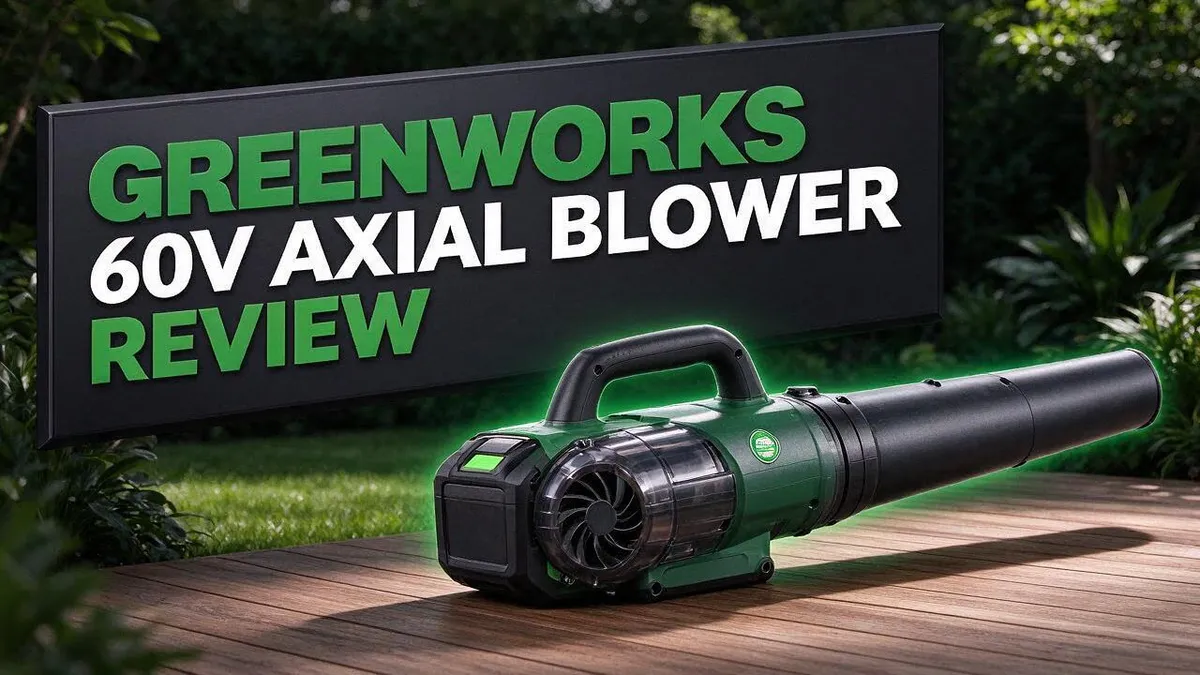
Greenworks 60V Axial Blower Review: Airflow, Weight, Noise, and Verdict
Looking for a yard tool that clears debris fast without the noise? The Greenworks 60V Axial Blower might be the answer. It runs on a brushless motor and a 60V battery platform. That mix delivers strong power for its class.
Many owners say it runs much quieter than gas blowers. It also feels lighter in hand. Greenworks claims up to 20% less weight than gas models, so your arms will thank you after a long afternoon of leaf duty.
Airflow ratings vary by model, so check the exact version you plan to use. The blower folds down to save storage space. A turbo button, a variable speed trigger, and cruise control give you control over each job.
Whether you clear a driveway or tidy a patio, this guide covers what you need to know about performance, comfort, and daily use.
In a Nutshell
-
Brushless power for its class: The 60V brushless platform gives strong performance without the bulk of a gas engine. Users often find it handles leaves, grass clippings, and loose soil with ease.
-
Easy starts every time: A push start engine gets the blower running fast. You skip the pull cord and the hassle of priming.
-
Extra force when needed: The turbo button delivers a burst of extra air for wet leaves or stubborn debris. Use it in short bursts to save battery life.
-
Comfort on longer jobs: A variable speed trigger with cruise control lets you set your pace. Your hand can rest while the blower keeps running at a steady level.
-
Lighter weight for easier handling: Greenworks reports up to 20 percent less weight than comparable gas models. That makes it easier to hold and steer around garden beds, decks, and tight corners.
-
A clear choice for homeowners: This blower suits home yards and patios well. Heavy daily commercial work may call for a stronger backpack model, and the Greenworks 80V Pro 800 CFM blower offers a higher tier option.
Airflow Power and Speed Control

- PROFESSIONAL-GRADE BRUSHLESS MOTOR – Engineered with advanced brushless motor technology, this 60V...
- LONG-LASTING RUNTIME FOR LARGE YARDS – Up to 50 minutes of runtime on a single charge (2.5Ah battery...
- PRECISE CONTROL & POWER ON DEMAND – Variable-speed trigger + concentrator nozzle enables 130 MPH...

Last update on 2026-11-01 / Affiliate links / Images from Amazon Product Advertising API
Airflow decides how fast you finish a cleanup job. Greenworks lists different airflow numbers across its models.
The Pro Axial model reaches 610 CFM when sold as a tool only. The BVC401 lists 520 CFM.
The backpack version climbs to 730 CFM. That extra air helps with large leaf piles and wide driveways.
Top speed reaches about 270 km/h in turbo mode. Forum users report about 140 mph at the outlet, which helps move stuck debris.
Speed control matters as much as raw power. A two speed switch lets you pick a gentle setting or a stronger one.
Use the low setting for dry leaves on patios. Switch to high for wet grass or gravel edges.
Lower airflow also protects nearby plants. Light mulch and fine soil stay put near flower beds.
Some versions add a mulch blade. It gives you another option for chopping leaves in the yard.
Greenworks also offers an 80V Pro model rated at 800 CFM. That model fits heavier, bigger jobs.
Commercial crews may want more force. One forum user noted this blower is not a commercial backpack unit.
Wind direction matters too. Work with the breeze so debris moves away from doors and windows.
Think about the surface before you start. Wet pavement needs a lighter touch than dry gravel.
Blower speed also affects dust. A slower setting kicks up less dust near patios and grills.
Short bursts often work better than constant full power. Pulse the trigger to loosen stubborn leaves in corners.
Clear one section at a time. Moving in rows keeps leaves from blowing back into areas you already cleaned.
Keep the air intake clear for steady performance. Dirt and grass clogs can reduce the flow over time.
Match the airflow to the debris. Start low, then raise the speed only when needed. Your yard and your back will thank you.
Weight, Folding Design, and Portability
Portability matters more than many buyers expect. A yard tool sits in storage for most of the year. How easily it moves from shed to lawn decides how often you use it.
Plan your route before you lift it. Check the path from the garage for steps, gates, and narrow doorways.
Hang the folded unit on a wall hook. This keeps the floor clear and the blower ready for the next job.
Balance makes a bigger difference than weight alone. A balanced tool feels steadier in your hands during long sessions. Hold the handle close to your body while you walk. This reduces strain on your wrist.
Battery placement also affects how the tool feels. Keep a charged battery near the blower before you start. Swapping batteries mid-job breaks your rhythm, so plan ahead.
Need to take it to a friend’s yard? Lay the blower flat in the trunk. Secure it so it does not slide during the drive.
The backpack version moves the load onto your back. This shifts strain away from your arms and shoulders. One forum user noted that this model is not a commercial backpack unit. Homeowners will find it fits regular yard work well, while busy crews may want a stronger option.
Storage space counts too. Measure the wall or corner where the blower will rest. A tool that stands upright takes less floor room than one left on the ground.
Keep the nozzle pointed away from your feet and face while you walk. This simple habit keeps everyone nearby safe.
Practice the carry once before a big job. A short test lap shows you where the weight sits and which grip feels best.
Noise Level and Operator Comfort
Noise often decides whether a leaf blower feels pleasant to use. Many users describe this model as quiet compared with gas or plug-in options. That matters on early weekend mornings.
A brushless motor tends to run smoother than a small gas engine. Less noise means fewer complaints from neighbors who work from home.
Quieter tools also make your own day easier. You can hear phone calls, pets, and kids without shouting over the motor.
Still, wear ear protection at high speed. Turbo mode pushes more air, and it usually sounds louder than normal use.
Vibration plays a big role in operator comfort too. Gas blowers often shake more, which can tire your hands and arms over time.
A lighter vibration feel helps you work longer. Keep your grip relaxed and let the tube angle do most of the work.
Timing matters as much as volume. Run the blower late morning or early afternoon, when neighbors are least bothered.
Start on a lower setting. Lower speed usually means less noise, so step up only when the debris needs it.
Breaks protect your body during long cleanups. Take a short pause every twenty minutes, then stretch your back and shoulders.
Stand with your feet apart and your knees slightly bent. Good posture reduces strain and keeps your focus on the job.
Comfort grows when you feel in control. Test the handle weight and trigger reach before you start the first session.
Hearing safety also matters for kids and pets. Keep them inside or at a safe distance while the blower runs.
Plan a quiet break after each job. Sit down, drink water, and let your ears recover before the next task.
Overall, this blower offers a calmer experience than many gas tools. Comfort and noise control make it easier to stick with yard work.
Top 3 Alternatives
EGO Power+ Blower

- TURBO MODE: Battery powered leaf blower lets you power though wet leaves, caked on grass, rocks, and...
- UP TO 90 MINUTES OF RUNTIME: A single charge of the included two 4.0Ah batteries lets you work with the...
- DIGITAL DISPLAY: Monitor blower performance, battery charge status, and cruise-lock in real time on the...
Last update on 2026-11-01 / Affiliate links / Images from Amazon Product Advertising API
The EGO Power+ Blower gives you steady power for big yards. It runs quietly, so your neighbors will not mind early weekend cleanups. The tool feels light in the hand and balances well during long sessions.
Many owners praise its long run time on a single charge. This helps you finish large jobs without stopping to swap batteries. You can also adjust the speed to match the task, whether you clear fine dust or heavy wet leaves.
Ryobi Jet Fan Blower

Last update on 2026-11-01 / Affiliate links / Images from Amazon Product Advertising API
The Ryobi Jet Fan Blower is a great pick for tight spaces. Its slim nozzle helps you reach under decks, behind shrubs, and along fences. Many people like how easy it is to store in a small garage.
It delivers strong air flow for its size. Quick cleanups on patios, walkways, and garden beds take only minutes. The light body keeps your arms fresh during short jobs.
Makita LXT Blower

- Variable speed control by trigger
- 3 air volume settings: Low, Medium, High
- Vacuum function - can be used as a vacuum with a dust bag. Increased air volume.
Last update on 2026-11-01 / Affiliate links / Images from Amazon Product Advertising API
The Makita LXT Blower is built for hard, daily use. It offers a powerful motor and a comfortable grip that reduces fatigue. Homeowners and landscapers both trust it for regular yard care.
Users often say it handles wet leaves with ease. It works well for larger properties and frequent jobs. Its sturdy housing holds up well over time, even when it gets bumped around the shed.
Yard Coverage and Best Uses
Most yards need a blower for a few main jobs. This model handles those jobs well. Think about where debris collects most often in your space.
Driveways and walkways gather grass clippings and fallen leaves quickly. This blower clears those hard surfaces in a few passes. Start at the far edge and push debris toward the lawn or the curb.
Patios and decks need a lighter touch. Loose debris moves easily with a steady sweep. Keep the nozzle close to the surface so small items stay put. Sweep the corners last, since debris often hides there.
Garden beds need extra care. Bark mulch can scatter fast, so aim the air toward open lawn instead. Work slowly near new seedlings, since their roots sit close to the surface.
Gutters and porch steps also collect debris. Clear the ground below the gutters after you clean them. The blower pushes loose material away from the house.
Sizing your yard matters. A small yard may need only a short session. A larger lot with several zones may need a spare charged battery so you can finish without stopping.
Seasons change the workload. Spring cleanups often remove winter litter and twigs. Fall brings heavier piles of leaves along fence lines and hedges.
Shaded areas under trees hold damp leaves that cling to the lawn. Make one slow pass first, then a second pass to lift stubborn pieces.
Break the yard into zones. Clean the front lawn first, then the side yard, then the back. Finish with a quick sweep of the driveway so debris does not return.
Pet owners find this tool helpful too. It clears loose fur, dry grass, and pine needles from a dog run quickly. Many owners prefer it over raking, which can tear up turf.
In short, this blower suits most yards with paved areas, garden beds, and seasonal debris. Match your yard size to your battery plan, and it will serve you well all year.
Maintenance and Long-Term Durability
Clear the air intake after every session. Leaves, dust, and wet grass can block the vents. A clogged intake forces the motor to work harder than it should.
A brushless motor has no brushes to replace. That means fewer parts wear down with regular use. Still, a quick check keeps the tool performing well.
Wipe the housing with a dry cloth. Use a soft brush around the nozzle and the trigger area. Avoid spraying water into the tool, since moisture can reach the electronics.
Clean the blower right after use, while debris is still loose. Dried mud and sap stick hard to plastic surfaces.
Battery care matters most for a long lifespan. Store the battery indoors at room temperature. Never leave it in a hot car or a freezing shed.
Charge the battery soon after each session. This habit helps the cells stay healthy over time. Remove the battery when the tool sits unused for a long break.
Check the screws and folding joints once a month. Loose fasteners can rattle and wear parts faster. Tighten them gently with the right driver.
Test the power switch and trigger often. Press each control slowly to confirm a smooth response. A sticky trigger deserves attention before your next big job.
Read the owner manual before your first cleaning. It lists the approved cleaning steps and battery guidelines. Keep it near the tool so you can check it fast.
Register the tool with the maker after you buy it. This step makes it easier to confirm warranty terms if a problem appears.
Store the blower in a dry spot. Humidity can cause rust on metal parts and damage wiring over time. A covered shelf or a sealed bin works well.
Good care keeps the blower ready for many seasons. Small habits after each job add up fast. Your yard will thank you with a clean, tidy look.
Pros and Cons
Pros
- The 60V brushless platform gives steady power for everyday cleanup.
- A turbo button adds extra air for stubborn debris.
- Cruise control on the trigger helps during long, even sweeps.
- A 2 speed switch lets you match power to the job.
- Some models include a mulch blade for leaf cleanup.
Cons
- One forum user says it is not a commercial backpack blower.
- Specs vary by source, so check the exact model before you buy.
- Few independent reviews confirm the brand claims.
- Head to head comparisons with other brands are hard to find.
Who Should Buy It
Homeowners who want quiet cleanup will likely enjoy this blower. Neighbors hear far less noise than they would from a gas model.
People who clean early in the morning also benefit. A calmer motor means fewer complaints from nearby homes. Families with young children may appreciate that gentle sound too.
Renters and townhouse owners often have limited storage space. This blower folds down, so it fits in a closet or car trunk. Its lighter build also makes it easier to carry up stairs.
Older adults or anyone with limited upper body strength may find the lighter weight helpful. Shorter sessions with less fatigue keep the job manageable.
Gardeners with light debris get the most out of it. Fresh leaves, loose grass, and small twigs clear quickly. Heavy wet mats may need a second pass. Light jobs like this let the tool shine and save energy.
First time tool buyers may find the controls easy to learn. The trigger and switches feel simple, so a new user can start fast.
People with dust or pollen allergies should take care. Any blower stirs dust into the air. Wearing a mask and working on calm days helps a lot.
Busy landscapers should look elsewhere. One forum user says this model is not a commercial backpack blower. Professional crews usually need tools built for long, daily shifts.
Careful shoppers who want proof may want to wait. Independent data on this model remains thin. Reading firsthand feedback from owners helps fill that gap before you decide. Look for videos showing the tool in real yards.
Owners of other Greenworks 60V tools may find this one convenient. A shared battery platform means fewer chargers to manage. Anyone needing more muscle can look at the 80V Pro 800 CFM model instead.
In short, this blower suits quiet, light, and space saving households best. Heavier jobs and commercial work call for something stronger.
Final Verdict
The Greenworks 60V Axial Blower earns a solid spot on the shortlist. It offers quiet, light, and capable cleanup for most home yards. Still, the proof behind the brand claims is thin.
Think of this blower as a strong daily helper rather than a heavy duty workhorse. It handles leaves on patios and clippings on driveways with ease. Larger jobs may call for something built for the long haul.
The biggest open question is the spec sheet. Model numbers and airflow figures change from one source to another. Before you commit, match the exact model name to the listing you see. This small step saves you from surprises later.
Compare this blower to your own cleaning habits. If you sweep the same patio each week, the quiet motor and easy controls fit well. If you clear wide areas of wet leaves, the lack of documented toughness may leave you wanting more.
Trust matters, and the record is light. Few independent tests back up the claims, and head to head matchups are scarce. That does not mean the tool fails. It simply means you should test it yourself.
Real world feedback often tells you more than a spec sheet. Ask a friend who owns one how it performs after months of use. Look for owners who describe their yard size and debris type. Their stories reveal the strengths that numbers hide.
Here is a simple way to decide. Start with your typical job size. Then check whether the model you want matches that job. Use the first few weeks to run it through your toughest regular task.
Our bottom line is clear. This blower suits homeowners who want quiet, light cleanup with modern battery power. Heavy professional use calls for a different machine. Read the exact model details, then decide with confidence.
Frequently Asked Questions
Is this blower a good switch from gas?
Many people moving from gas blowers notice the difference right away. The quieter motor makes early morning cleanups far more pleasant. There is also no pull cord or fuel mixing to deal with.
What should I check before I buy?
Start by confirming the exact model number. Look for whether a battery and charger come in the box. Compare the airflow figure on the listing with the one in the manual, since numbers vary by source.
How can I make one charge last longer?
Pick the lower speed setting for light jobs like fresh grass clippings. Save the turbo button for tough spots only. Smaller jobs use less power, so the charge goes further.
Is it easy to store after a big cleanup?
Yes, the blower folds down to save space. Hang it on a wall hook or stand it upright in a closet. Remove the battery before storing it for long periods.
How do I keep the blower in good shape?
Wipe off dust and debris after each use. Check the air intake for clogs before storing it. Keep the battery at room temperature for the best life.

Lufy combines years of electrical expertise with a passion for emerging technology to deliver honest, detailed reviews of tools, machines, and gadgets. Through electrokit.blog, Lufy empowers readers with practical insights and comparisons to choose the best electrical equipment for their needs.