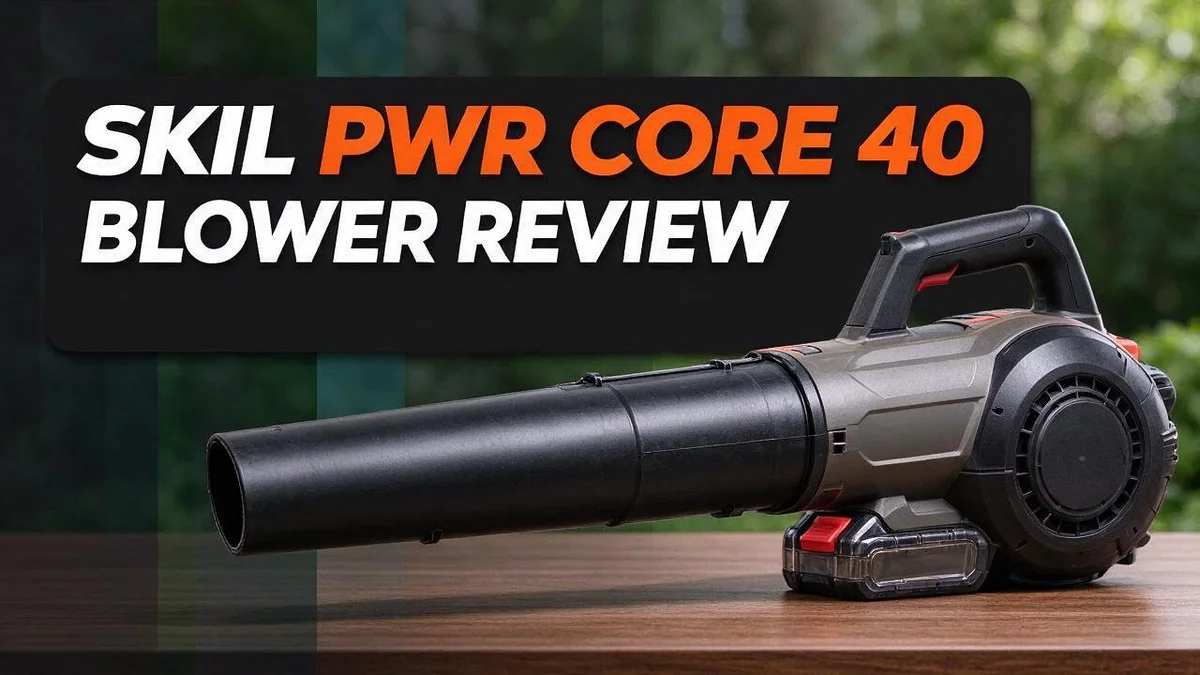
Skil PWR CORE 40 Blower Review: Airflow, Battery Life and Real-World Performance
Leaves piling up on your lawn? A good blower can save you hours of raking. The Skil PWR CORE 40 Blower promises strong power in a light, easy package.
Here is what makes it stand out. It uses a 40V brushless motor with three speed settings. You also get Power Boost and cruise control for longer jobs.
It is lightweight and easy to carry. It handles leaves and acorns well. The second handle and stubby nozzle add comfort and control.
Runtime matters too. The 4.0Ah lithium battery claims about 25 percent longer runtime. Still, the charger feels a bit cheap, and one reviewer found the power a little weak.
Is it the right tool for your yard? Let’s take a closer look at its specs, pros, and cons so you can decide.
In a Nutshell
-
Airflow numbers vary by listing: Most listings show about 530 CFM and 120 to 130 MPH. Some show higher figures, so check the exact specs before you choose a model that fits your yard.
-
Power Boost adds extra push: Use it when wet leaves stick to the lawn or cling to the driveway. Cruise control also keeps your speed steady during long cleanups, so your hand can rest.
-
Battery claims look promising: The 4.0Ah pack promises about 25 percent longer runtime than standard packs. Charging takes about 15 minutes, although one listing says it takes an hour.
-
The charger feels basic: Some owners say the charger feels cheap in the hand. The build quality may not match the rest of the tool, so handle it with care.
-
Nozzle and handle help control: The stubby nozzle reaches tight corners and under shrubs. The second handle gives you a steadier grip, and the motor sound is pleasant to hear.
-
Power may feel modest: One reviewer found the output weak for heavy debris. It works best for regular leaf and acorn cleanup rather than large, packed piles.
Airflow Performance

- CORDLESS LEAF BLOWER KIT - Includes the 40V leaf blower, PWR CORE 40 2.0Ah battery, and 60W charger
- UP TO 460 CFM - With up to 120 MPH air speed for powerful clearing performance
- UP TO 60 MINUTES OF RUNTIME - With included 2.0Ah battery on low speed setting

Last update on 2026-11-01 / Affiliate links / Images from Amazon Product Advertising API
Airflow numbers tell only part of the story. Volume and speed work together. Each one shapes how the blower moves debris across your yard.
Volume refers to CFM, or cubic feet per minute. Think of it as the amount of air flowing out. A higher volume pushes a wider pile across the grass.
Speed refers to MPH, or how fast the air leaves the tube. Speed helps lift light debris off the ground. It also loosens leaves that stick in place.
Listings for this model show a range from 500 to 650 CFM. Different pages may show different numbers. Check the spec sheet for the exact figures.
Match the setting to the job. Use lower speeds for loose leaves on open grass. Save the top speed for dense piles or heavy wet debris.
Wide, open lawns need steady airflow. Long, even sweeps keep leaves moving toward one spot. This saves time when you clear a large yard.
Tight spaces call for a different approach. Walk slowly along fence lines and garden beds. Let the air do the work instead of forcing the nozzle close to the ground.
Watch for dust and small litter. Strong airflow can kick up fine material. Wear eye protection and clear the area first for the best results.
Clear the intake for steady flow. Blocked air intakes reduce output over time. Check the vents now and then, especially after clearing wet debris.
Your technique matters as much as the machine. Keep the nozzle low and angled in the direction you travel. This keeps the air stream focused on the pile.
Think about total area too. Larger yards need more time per pass. Plan your route in sections so you do not miss any spots.
Pick the right tool for your yard. Airflow performance depends on your space and the type of debris you face. A quick test shows how the blower handles your leaves, grass, and fences.
Battery and Runtime
Runtime depends on how you work. Your speed setting shapes how long each charge lasts. Lower settings stretch the battery further. Keep the speed low when leaves are dry and light. Save the top speed for tough jobs only.
A 2020 review tested a 2.5Ah battery. That pack holds less energy than the 4.0Ah option. Smaller packs usually run out sooner. Check which battery comes with your kit before you buy.
Charging time varies by listing. Most details point to a 15 minute charge. One listing says a full charge takes one hour. Read the product details closely so you know what to expect. A fast charge keeps your cleanup moving.
Fully charge before each big job. Start with a full pack for large cleanups. A partial charge can leave you short halfway through the yard. A quick top-up before you begin saves time and frustration.
A spare battery keeps you working. Many yards need more than one charge. Keep a second pack ready while you finish the first. Swap packs and keep going without a long break.
Plan your yard in sections. Start with the largest area while the battery is fresh. Save small corners and garden beds for the end. This simple order helps you finish before the power fades.
Expect real results, not perfect ones. Runtime claims come from the maker’s tests. Your yard may be different. Thick wet leaves drain power faster than dry leaves on open grass. Plan for a little less time than the listing suggests.
Store the battery with care. Keep it indoors at room temperature. Let it cool after heavy use before you charge it again. Extreme heat and cold can shorten battery life over time.
Track your own results. Note how long a full charge lasts on your lawn. Your own notes give you the best answer. They show whether this battery fits your yard size and your routine.
Ergonomics and Handling
The Skil PWR CORE 40 feels light in the hand. Most users can hold it through a full cleanup without much strain. Lighter tools reduce fatigue in the arms and shoulders, so you can work longer.
The second handle gives you a choice in how you hold the tool. You can keep one hand on the main grip and rest the other on the front. This setup helps you keep the tube steady as you sweep.
Switching hands is a simple habit that makes a real difference. Change your grip every few minutes to spread the work across both arms. Keep your elbows close to your body so your movements stay relaxed and smooth.
The motor produces a steady tone rather than a harsh rattle. This makes the tool easier to use for longer periods. Your ears and hands will thank you after a long afternoon.
Posture matters more than many people expect. Bend at the knees when you reach low piles of leaves. Keep your back straight and your shoulders loose. Avoid twisting your waist while you walk behind the tool.
Gloves help you maintain a firm grip without squeezing too hard. A firm grip sounds helpful, but a tight squeeze can tire your hand quickly. Loose, steady control feels better and keeps your work accurate.
Storage also plays a role in comfort. Hang the blower on a wall hook by its handle to save floor space. Store it where you can grab it quickly, so you never lug it across the yard unnecessarily.
Test the feel before each job. Walk a short path first and notice how the weight sits in your hands. Adjust your stance until the tool feels natural. A few minutes of practice can make the whole cleanup easier and more enjoyable.
Top 3 Alternatives
Ryobi 40V Blower

- 40V PLATFORM RYOBI BLOWER
- TOOL ONLY; DOES NOT INCLUDE BATTERY OR CHARGER
- 550 CFM BLOWER, 120MPH GREAT FOR LEAVES & DEBRIS
Last update on 2026-11-01 / Affiliate links / Images from Amazon Product Advertising API
The Ryobi 40V Blower is a smart pick for homeowners who already own Ryobi batteries. It runs on the same 40V battery platform, so one battery can power many tools.
It feels light in the hand, which helps during long cleanup days. Variable speed control lets you match the airflow to each job.
Use a low setting for patio sweeping. Switch to a higher setting for wet leaves and loose debris. Pick a setting that fits the job and keep the work moving.
EGO Power+ Blower

- TURBO MODE: Battery powered leaf blower lets you power though wet leaves, caked on grass, rocks, and...
- UP TO 90 MINUTES OF RUNTIME: A single charge of the included two 4.0Ah batteries lets you work with the...
- DIGITAL DISPLAY: Monitor blower performance, battery charge status, and cruise-lock in real time on the...
Last update on 2026-11-01 / Affiliate links / Images from Amazon Product Advertising API
The EGO Power+ Blower is built for bigger yards and heavy cleanup. It uses a 56V battery system, which gives it extra power.
Many users like its long run time on a single charge. You can finish large jobs without stopping to swap batteries.
It also runs quieter than many gas blowers. This makes it a good choice for neighborhoods where early morning or evening work matters.
Greenworks 40V Blower

- Efficient 40V Sweeper – Quickly clears leaves, debris, and light snow from patios, decks, porches...
- Powerful Performance – 150 MPH wind speed with 135 CFM airflow and a concentrator nozzle makes debris...
- Variable Speed Dial – Adjust airflow to handle light or heavy debris, providing flexibility for...
Last update on 2026-11-01 / Affiliate links / Images from Amazon Product Advertising API
The Greenworks 40V Blower gives you a simple, cordless option for light to medium cleanup. It works with Greenworks 40V batteries, so it fits into an existing setup.
The design stays easy to handle during longer sessions. You can keep working without feeling weighed down.
It suits small yards, decks, driveways, and patios. Pick it when you want quick cleanup without the hassle of cords or fuel.
Charging and Accessories
The charger is the part many owners notice first. Several reviewers say it feels cheap in the hand. Still, it does its job when you follow a few simple steps.
Choose a charging spot before you begin. Pick a dry area near an outlet. Keep the cord clear of walkways so no one trips on it.
Let the battery cool before you plug it in. A warm pack charges better when it rests for a short time. Avoid charging right after a hard run in direct sun.
Think of the stubby nozzle as your main accessory. It keeps the tube short and easy to aim. You can direct debris into tight corners without much reach.
Check the nozzle before each job. Look for grass clumps or debris that may block the opening. A clean tip keeps the airflow focused where you need it.
Handle the charger with dry hands. Wet grips can cause slips or poor contact. Wipe the contacts now and then with a dry cloth.
Keep an eye on the light indicators. Many chargers show status with lights or signals. Check them before you start a new session.
Good habits make the charger last longer. Unplug it once the light shows full. Leaving it connected for long periods adds no real benefit.
Give the accessories a quick look every few uses. Check for cracks in the nozzle or loose fittings on the tube. Small problems grow when you ignore them.
Pack a small kit for each session. Bring a small brush for the nozzle and a dry cloth. Keep these items near the charger so you never hunt for them.
Your setup shapes your results. A tidy station near the charger saves time. You spend more minutes working and fewer minutes searching.
Test each accessory on a small patch first. Watch how it handles leaves and light litter. Then you know what to expect on the full yard.
Noise and Motor Feel
Noise matters more than many buyers expect. You will run this blower for long stretches, so the sound adds up.
The brushless motor helps keep the sound down. Brushless designs tend to run quieter than older brushed motors. Your neighbors may notice less racket during early cleanups.
Power Boost creates the loudest moment. Expect the pitch to rise when you push the tool to full force. Use boost only when wet leaves or dense debris need it.
Cruise control can smooth out the noise too. Holding a steady speed keeps the tone even. Your ears get a break from sudden changes in volume.
Ear protection still makes sense. Pack simple foam plugs or earmuffs for longer sessions. Your hearing matters more than a quick finish.
Listen for changes in the motor sound. A sudden whine or uneven hum can signal a blockage. Stop the tool and check the intake and nozzle right away.
Vibration tells a story too. Smooth running feels calm in your arms. Rough shaking may mean debris sits inside the housing or a loose part needs attention.
Keep the vents clear. Dust and grass clippings can block airflow and make the motor work harder. A quick brush after each session keeps the fan area clean.
Heat often comes with noise. A hot motor can sound strained. Give the tool short breaks during heavy jobs so it stays cool.
Plan your work around neighbors. Early mornings and late evenings often bring complaints. Midday sessions usually feel more welcome in close neighborhoods.
Watch the motor over time. Note any new sound that appears after a few months of use. Early notice helps you spot wear before it grows into a repair.
Pros and Cons
Pros
- Strong enough for leaves and acorns on most lawns.
- Three speed settings let you match the blower to each job.
- Power Boost helps you break through a stubborn pile.
- Cruise control keeps a steady pace on long passes.
- Decent runtime covers a full cleanup session.
Cons
- Some reviewers find the power output weak for heavy, wet debris.
- A 2020 review tested an older 2.5Ah battery, so results can vary.
- Specs differ between listings, so check the model before you buy.
Who Should Buy It
Homeowners with small to medium yards will likely feel at home with this blower. Light cleanup jobs fit this tool well. Think patios, decks, sidewalks, and the edges of garden beds.
Beginners often appreciate a cordless tool with simple controls. No fuel mixing or pull cords stand between you and the job. You can grab it, press the button, and start sweeping.
Renters and apartment dwellers also gain a lot here. Storage space can be tight, so a compact cordless unit tucks neatly into a closet or small shed. Gas cans and oil bottles never need a spot on your shelf.
Fall leaf season often drives the decision. This blower clears leaves from lawns, driveways, and walkways in a short time. It works best when you use it often, not after leaves pile up for weeks.
Families with young children may also value a quick reset. A short sweep after play clears grass clippings and dirt from porches and steps. Little messes stay small, so the yard looks tidy all season.
Shoppers with large properties should plan ahead. Wide lawns and long fence lines may require several sessions. Plan your battery swaps and breaks so the job stays manageable.
Anyone who expects to clear thick, soaked debris should look again. Wet mats call for more force than this model seems to deliver. Compare options before you decide.
Ask yourself three simple questions before you buy. How large is your yard? How often will you clean? Do you need a tool for quick tidy ups or for heavy seasonal storms? Your answers will point you toward the right choice.
This blower fits people who want a simple, quick helper. It suits everyday tidying far better than massive yard overhauls.
Final Verdict
The Skil PWR CORE 40 Blower earns a spot on the shortlist for many homeowners. It handles everyday cleanup with a steady hand. Its mix of power and convenience makes it easy to recommend.
The bigger question is not whether it works. The real question is whether it fits your yard. Think about the size of your space, the type of debris you face, and how often you plan to clean.
If you have a large property covered in heavy, wet debris, look at a higher output model first. This blower shines on smaller jobs. It does not replace every heavy tool in your shed.
Consider your daily routine too. A quick sweep across a deck or patio takes only minutes. Many people stop reaching for the broom after one trial. That habit change often sells the tool better than any spec sheet.
Think about who will use it. Teens, partners, and older family members often find the controls simple. A tool that anyone can start without fuss keeps the whole household involved in yard care.
Pick a calm morning for your first session and time the job. Note how the battery holds up on your typical pile. That simple test shows you more than any review can.
Our takeaway is clear. This blower suits you if you want a light, cordless helper for leaves, clippings, and walkways. Skip it if you need serious force for thick, soaked piles. Match the version to your yard, and the choice becomes much easier.
In the end, this blower offers a friendly path to tidier outdoor spaces. It asks little from you and returns clean lawns in return. For many households, that trade is well worth making.
Frequently Asked Questions
How long does charging take?
Charging time depends on the listing you check. Some listings claim a 15-minute charge, while others mention one hour. Read the product details before you plan your cleanup. A quick charge helps you finish a second round of leaves without a long wait.
Does the stubby nozzle help with tight spots?
Yes, the short nozzle helps you aim air at fence lines, plant beds, and the edges of patios. It keeps your hands close to the work. You can clear debris from corners that a longer tube might miss.
Does the second handle make the blower easier to control?
A second handle gives you a steadier grip on bigger jobs. You can guide the tool with both hands. This matters most when you sweep wide areas or push debris across a driveway.
Is the charger built to last?
Some reviewers say the charger feels basic compared with the rest of the tool. Treat it with care. Keep it in a dry, indoor spot and unplug it once the battery is full. Simple habits like these help the charger stay in good shape for longer.
Can I charge it at home?
Yes, you can charge the battery at home with a standard outlet. Choose a spot near your garage or shed so the battery is ready when you need it. A charged battery means you can start your cleanup right away.

Lufy combines years of electrical expertise with a passion for emerging technology to deliver honest, detailed reviews of tools, machines, and gadgets. Through electrokit.blog, Lufy empowers readers with practical insights and comparisons to choose the best electrical equipment for their needs.