Bluetti EB3A Portable Power Station Review: Features & Reliability
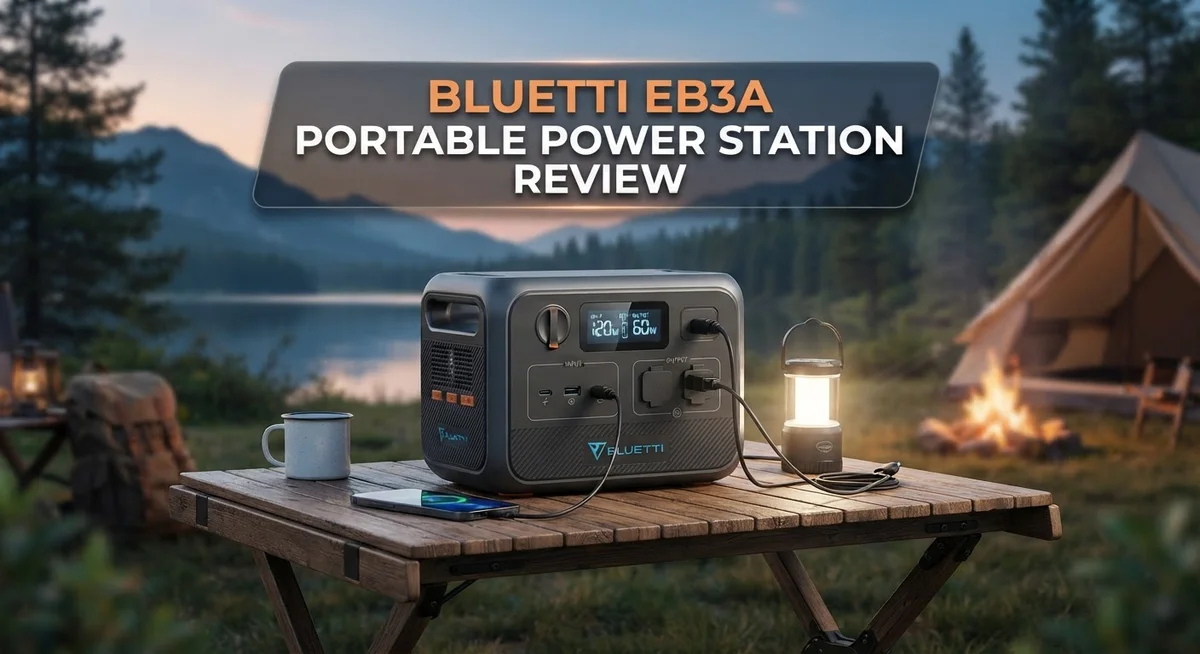
Looking for a reliable power backup for your next camping trip? The BLUETTI EB3A Portable Power Station might catch your eye. This compact unit packs a LiFePO4 battery and delivers 600W AC output for your devices.
Weighing just over 10 lbs, it’s easy to carry anywhere. You can power small fridges, phones, and even heater fans during outdoor trips.
Fast charging sets this station apart from many rivals. All outlets sit right on the front panel, so you can plug in without fuss.
This review covers everything you need to know. We will look at its build quality, performance, and real user experiences.
Is this little power station the right fit for your needs? Let’s find out together as we break down its features, strengths, and a few drawbacks worth noting.
In a Nutshell
Here’s a quick snapshot of what the BLUETTI EB3A brings to the table.
-
Battery Type: It uses a LiFePO4 battery. This means a longer lifespan compared to older battery types.
-
Smart Design: All outlets sit on the front and top. You can plug in devices without fumbling around the back.
-
Build Quality: The materials feel sturdy and well made. It holds up nicely during regular outdoor trips.
-
Best Use Case: This station shines during car camping trips. It powers small fridges, phones, and even a heater fan.
-
Known Limitations: Keep in mind, this model has no car charging port and no weatherproofing. Some users also reported a burning smell while charging.
-
Current Status: This model is now discontinued. Finding one might take extra effort, but existing units still work well for many users.
Overall, the EB3A offers solid power for short trips. Just watch for reported reliability issues with long term use.
Power Capacity and Output Specifications
The EB3A packs 268Wh to 537Wh of capacity depending on the model variant you find. This range means you get flexibility based on your power needs and how much you want to carry.
The AC output maxes out at 600W continuous power. This is enough to run most small appliances like phone chargers, laptops, and portable fans. However, it cannot handle high wattage devices such as hair dryers or space heaters that demand more than 600W.
The battery uses LiFePO4 chemistry, which is a solid choice. This type lasts longer than older lithium ion batteries and handles charge cycles better over time. You get more years of use from this technology.
Output ports sit on the front and top of the unit. You’ll find AC outlets, USB ports, and USB C connections all easily accessible. This design means you don’t flip the station around hunting for the right port.
The weight sits between 10.1 and 16.5 lbs depending on capacity. This makes it genuinely portable for camping trips and travel. You can toss it in a backpack or car without major strain.
Operating temperature ranges from 14°F to 104°F. This covers most camping seasons and indoor use. Cold weather performance stays stable, though extreme heat can reduce efficiency slightly.
Fast charging is a real advantage here. The EB3A charges quicker than many competitors in its size class. You spend less time waiting and more time using your power station.
The 600W output handles electronics well but has limits. Small appliances work fine. Heavy duty tools and high wattage devices will not work. Know your device power requirements before buying.
Overall, the power specs suit short trips and light duty use. The capacity is modest, so plan for devices that don’t need all day runtime. The output is sufficient for phones, cameras, and small gadgets. For longer adventures or power hungry equipment, you may need a larger model.

- [288Wh On-the-Go Power] - Only 9.4 lbs lightweight, carry it anywhere during storms! 288Wh capacity meets...
- [600W Continuous & 1500W Surge Power] - Get a full 600W output—twice as much as others. When you need...
- [50% Lower Power Consumption] - Upgraded UltraCell tech & smart cooling system cut power consumption by...
Last update on 2026-11-01 / Affiliate links / Images from Amazon Product Advertising API
Portability and Design
The BLUETTI EB3A measures roughly 10 inches by 7.1 inches by 7.2 inches. This compact footprint makes it genuinely easy to slip into a backpack or car trunk. You won’t struggle to find storage space for this unit.
Weight is where the EB3A really shines for portability. At just over 10 pounds, you can carry it one handed for short distances. The heavier variants reach 16.5 pounds, but that’s still light enough for most people to handle. Portability was clearly a design priority here.
The front and top placement of all outlets deserves special attention. You don’t need to flip or rotate the station to access power. Charging your phone, running a fan, or plugging in a small fridge all happen from convenient angles. This smart outlet layout saves frustration during camping trips.
The EB3A uses a sturdy LiFePO4 battery wrapped in what feels like quality materials. The exterior doesn’t feel cheap or flimsy. Build quality is one area where BLUETTI didn’t cut corners. That said, the unit has no weatherproofing protection. Rain or moisture can damage internal components, so keep it covered or stored indoors.
Operating temperatures range from 14°F to 104°F. This means you can use it during cold mornings or hot afternoons without worry. The thermal range covers most camping seasons in temperate climates.
One design limitation stands out: no car charging port. You’ll need to charge it at home or find a wall outlet. This removes one convenience factor that some competitors offer.
The overall shape is boxy but not awkward. The handles and weight distribution make carrying natural and balanced. You won’t experience arm fatigue during short carries.
The discontinued status affects portability thinking slightly. Replacement parts may become harder to find. This matters if you plan long term ownership and need repairs down the road.
For car camping and short outdoor trips, the EB3A’s size and weight hit a sweet spot. It’s portable enough to move easily but substantial enough to hold meaningful power.
Charging Speed and Battery Technology
The EB3A charges faster than many competitors in its class. You can go from empty to full in just a few hours with the right charger. This speed matters when you’re preparing for a trip and running short on time.
LiFePO4 battery chemistry is the real star here. This technology lasts longer than older lithium ion batteries. You get more charge cycles before the battery degrades. The EB3A can handle hundreds of full charge cycles without losing much capacity.
LiFePO4 batteries also run cooler during operation. They’re safer and more stable than standard lithium options. This means fewer heat management issues and better reliability during normal use. The battery won’t degrade as quickly if you leave it partially charged for weeks.
Charging input options include wall outlets and solar panel compatibility. The wall outlet charges the unit quickly, usually within 2 to 4 hours depending on your charger wattage. Solar charging works but takes much longer, making it better for supplemental power rather than primary charging.
One important note: users reported a burning plastic smell during initial charging sessions. This typically fades after the first few uses. It’s worth mentioning because it can alarm first time users. The smell doesn’t indicate a dangerous condition, but it’s something to expect.
The charging circuit includes smart protection features. The unit stops charging automatically when the battery reaches full capacity. This prevents overcharging damage and extends battery lifespan. Temperature monitoring also kicks in if the battery gets too hot.
Real world charging speeds vary based on your power source. Wall outlets deliver consistent, predictable charging times. Car chargers (if available on your model) add flexibility for road trips. Solar panels offer independence but require sunny conditions and patience.
The combination of fast wall charging and LiFePO4 chemistry makes the EB3A practical for regular use. You won’t wait forever between trips. The battery technology ensures your investment lasts through many seasons of camping and outdoor adventures.
Top 3 Alternatives
Jackery Explorer 240

- Ultra-Lightweight: At only 7.5 lbs, the Explorer 300 delivers a robust 292Wh capacity while remaining...
- Versatile Power for 6 Devices: Equipped with 2 AC outlets, a 100W USB-C PD port, 2 USB-A ports, and a...
- Built to Last: Upgraded with premium LiFePO4 chemistry, this portable generator delivers over...
Last update on 2026-11-01 / Affiliate links / Images from Amazon Product Advertising API
The Jackery Explorer 240 serves as a lightweight choice for camping trips and emergency backup. This unit weighs just 6.6 pounds, making it easy to carry in one hand. The 240Wh capacity handles small devices like phones, tablets, and laptops without breaking a sweat.
You get two AC outlets and two USB-A ports for charging multiple items at once. The LED display shows your battery level clearly. Solar charging works well if you add a compatible panel. Most users appreciate how quiet and compact this model stays during operation.
EcoFlow River 2

- [1 Hour AC Recharge] - Fully recharge the electric generator using an AC outlet in only 1 hour with...
- [Power All Your Essentials] - With an output of up to 600W, run 6 essential appliances simultaneously...
- [LFP Long-Life Battery] - Using LFP battery cells, use and recharge RIVER 2 more than 3000 times before...
Last update on 2026-11-01 / Affiliate links / Images from Amazon Product Advertising API
The EcoFlow River 2 brings more power to the table with its 256Wh battery capacity. This unit weighs 7.7 pounds and fits easily into backpacks. The design includes a bright LCD screen that displays real-time power information.
You’ll find three AC outlets and multiple USB ports for flexibility. Fast charging technology means you reach full battery in about an hour using wall power. The unit handles mid-range devices and small appliances smoothly. Many owners love the quiet operation and reliable performance during outdoor adventures.
Anker 757 PowerHouse

- 𝐔𝐩 𝐭𝐨 𝟑𝟓-𝐇𝐨𝐮𝐫 𝐅𝐫𝐢𝐝𝐠𝐞 𝐁𝐚𝐜𝐤𝐮𝐩: With 6W...
- 𝟏𝟎,𝟎𝟎𝟎-𝐂𝐲𝐜𝐥𝐞 𝐋𝐅𝐏 𝐁𝐚𝐭𝐭𝐞𝐫𝐲: Powered by 314Ah...
- ...
Last update on 2026-11-01 / Affiliate links / Images from Amazon Product Advertising API
The Anker 757 PowerHouse steps up with 1229Wh of storage capacity. This heavier unit (around 28 pounds) suits stationary setups better than portable use. The large battery powers bigger appliances and multiple devices simultaneously.
The interface includes an easy-to-read display and straightforward button controls. Multiple charging ports include AC outlets, USB-C, and standard USB options. Fast charging from solar panels or wall outlets keeps you powered up quickly. The robust construction means this unit lasts through years of regular use.
Real-World Performance for Camping and Travel
When you take the EB3A on a camping trip, it performs exactly as a mid-size power station should. The 600W output handles your essential devices without breaking a sweat. Run a portable fridge, charge laptops, power LED lights, and keep fans running all at once. Most campers report steady performance during a full weekend getaway.
The real strength shows up in car camping scenarios. You park at a campground with hookups nearby, and the EB3A keeps your setup comfortable. A small heater fan stays on through cool nights. Your phone charges multiple times over. A portable cooler runs without draining the battery fast. This is exactly what the unit was built for.
For hiking trips or backcountry use, expectations need adjustment. The 268Wh to 537Wh capacity means you’re picking your priorities. Charge phones and cameras, yes. Run multiple high-drain devices simultaneously, no. Pack smart and you’ll have power when you need it most.
Travel performance depends heavily on your power source. Wall outlet charging at a hotel or cabin works great. Solar panel charging moves slower but keeps you independent. The LiFePO4 battery handles temperature swings well, so mountain trips or desert camping won’t damage the cells. Just keep it between 14°F and 104°F when possible.
One concern surfaces in real use: reliability reports show mixed results. Some users report flawless performance over years. Others experienced failures within months. This variation makes the EB3A less predictable than newer models from the same brand.
Weight and size make transport effortless. At 10.1 to 16.5 lbs, most people carry it one handed. Fits easily in a car trunk, backpack, or travel bag. The front and top outlet placement means you access ports without moving the unit around.
The discontinued status matters for travel plans. Finding replacement parts becomes harder over time. If something breaks mid-trip, support options narrow down. This pushes many travelers toward current models with active manufacturer backing.
Reliability and Durability Concerns
The EB3A comes with a significant caveat: it’s a discontinued model. This matters more than you might think. When a power station leaves production, finding replacement parts becomes a real challenge. Battery packs, charging cables, and internal components grow harder to source over time.
Reliability concerns stand out in user reports. Some owners experienced device failures within nine months of purchase. These aren’t isolated complaints. The pattern suggests potential weaknesses in the internal circuitry or battery management system. If you rely on this unit for critical power needs, this history warrants serious consideration.
The LiFePO4 battery itself is solid technology. This chemistry type runs cooler and lasts longer than standard lithium batteries. However, the EB3A’s overall reliability record doesn’t match what you’d expect from quality battery technology. The issue likely stems from other components, not the battery core.
One specific concern involves the charging process. Multiple users reported a burning plastic smell during initial charging sessions. While some burning plastic odor can occur during first use, persistent smells signal a problem. This could indicate suboptimal thermal management or low-quality internal wiring.
The lack of weatherproofing adds another durability concern. This unit has no IP rating for dust or water resistance. Outdoor use requires careful protection from moisture and dirt. A single rainstorm or dust storm could damage internal components. You’ll need a protective case or bag for any serious outdoor adventure.
The discontinued status also means Bluetti won’t release firmware updates or improvements. Any software bugs discovered after production stopped will remain unfixed. You get what you buy, with no future enhancements.
For short term use and light duty applications, the EB3A can work fine. Many owners report trouble free operation for camping trips and emergency backup. The risk increases significantly if you plan extended ownership or depend on the unit regularly. Weigh these reliability concerns carefully before committing to this model. Newer alternatives from competitors may offer better long term peace of mind.
Pros and Cons
Pros
- Lightweight and compact design makes it easy to carry on camping trips and outdoor adventures
- Fast charging speeds with LiFePO4 battery technology that runs cooler than standard lithium options
- High quality build materials and all outlets positioned on the front and top for simple access
- Works great for car camping scenarios like powering fridges, fans, and personal electronics
Cons
- Discontinued model means no future firmware updates or manufacturer support available
- Some users reported device failures within nine months of purchase, raising reliability questions
- No weatherproofing or dust resistance rating for outdoor use in harsh conditions
- Low total capacity limits extended trips and won’t sustain power hungry appliances for long periods
Who Should Buy It
The EB3A suits specific user types and use cases well. If you camp occasionally and need light power support, this unit works for you. Car campers benefit most from its design. You can power a portable fridge, charge phones, run a fan, or operate a small heater without trouble.
Ultralight backpackers should skip this model. The 268 to 537Wh capacity won’t sustain extended backcountry trips. Weight matters less than runtime for serious hiking. This power station serves casual outdoor enthusiasts, not expedition planners.
Weekend warriors love the EB3A. You travel frequently but don’t need extended power reserves. You want something that fits in your vehicle easily. The 10.1 to 16.5 pound weight range keeps your gear manageable.
Tech gadget owners benefit here too. You charge laptops, tablets, cameras, and portable speakers regularly. The 600W AC output handles most consumer electronics. Multiple outlets on the front and top mean you access devices without moving the unit around.
Be honest about your reliability expectations though. This is a discontinued model. Some users reported failures within nine months. If you need a power station for critical applications or depend on manufacturer support, look elsewhere. The lack of future firmware updates matters if you want long term device improvements.
Families doing seasonal camping trips fit well here. You’re not using this daily. You deploy it for specific adventures. The compact dimensions of roughly 10 by 7.1 by 7.2 inches pack into car trunks easily.
Skip the EB3A if you live off grid or need year round backup power. The low capacity and reliability questions make it unsuitable for permanent installations. Weather resistance is nonexistent too. No IP rating means dust and moisture will damage it in harsh outdoor conditions.
Budget conscious campers appreciate the value proposition. You get LiFePO4 battery technology that runs cooler than standard lithium options. Fast charging speeds mean you’re ready for trips quickly. High quality build materials feel solid in your hands.
The EB3A works best for people who camp occasionally, travel light, and accept that discontinued status means no future support. You’re not relying on this for emergencies. You want convenience, not insurance.
Final Verdict
The BLUETTI EB3A earns a mixed final verdict. It shines in short bursts of outdoor power, but falls short for long term reliability.
Who should buy it? Campers who need a light, grab and go unit will enjoy this station. People wanting a backup for weekend trips get solid value from its design.
Who should skip it? Anyone needing dependable, long term power should look elsewhere. Off grid users and full time travelers need something sturdier.
Since this model is discontinued, buyers should check current stock before deciding. Limited availability means once units sell out, replacements get harder to find.
Compare this station to active models like the BLUETTI AC50B or options from EcoFlow and Jackery. These brands offer ongoing support and updated designs.
Anker also makes solid alternatives for shoppers wanting fresh warranty coverage. New models often fix issues found in older units like the EB3A.
Think about your power needs before buying. Short trips and light gadgets work fine with this unit. Heavy appliances or extended outages need bigger, newer stations.
Pair it smart. Adding a solar panel can stretch the EB3A’s usefulness during day trips. This combo helps offset its smaller capacity for longer outings.
Customer support stays limited since production stopped. Expect fewer answers if problems arise down the road.
For first time power station buyers, the EB3A offers a simple way to test this technology. It teaches users what to expect from portable power without a steep learning curve.
The overall score depends on your expectations. Light, occasional use brings satisfaction. Heavy, daily reliance brings disappointment.
Our final take? The EB3A works as a solid starter unit for casual outdoor use. Just stay realistic about its limits and plan backup options for bigger power needs.
Frequently Asked Questions
Does the EB3A work with solar panels?
Yes, the EB3A accepts solar input through its dedicated port. You can pair it with compatible solar panels to recharge during daytime trips. This setup works well for weekend camping or outdoor adventures.
However, the EB3A’s small 268–537Wh capacity fills quickly. Solar charging helps extend your runtime, but expect slower recharge times on cloudy days. Most users pair it with panels rated 100W or higher for practical results.
What’s the real battery lifespan of this unit?
The EB3A uses LiFePO4 battery technology, which typically lasts 3,000 to 5,000 charge cycles. That equals roughly 5 to 10 years of normal use.
Important note: Some users reported device failures within nine months, so individual units may vary. Since this model is discontinued, you won’t get firmware updates that might improve longevity. Check the warranty terms carefully before buying.
Can I use the EB3A in cold weather?
The EB3A operates safely between 14°F and 104°F. Cold temperatures reduce battery performance temporarily, but the unit won’t break. Once it warms up, normal output returns.
For winter camping, keep the EB3A inside your tent or sleeping bag when not in use. This prevents the battery from losing charge in extreme cold.
Is the EB3A waterproof?
No. The EB3A has no weatherproofing or dust resistance rating. Rain, snow, or splashes can damage internal components.
Keep it dry during outdoor trips. Use a protective case or bag if you’re near water. For harsh outdoor conditions, look at alternatives with IP ratings.

Lufy combines years of electrical expertise with a passion for emerging technology to deliver honest, detailed reviews of tools, machines, and gadgets. Through electrokit.blog, Lufy empowers readers with practical insights and comparisons to choose the best electrical equipment for their needs.