
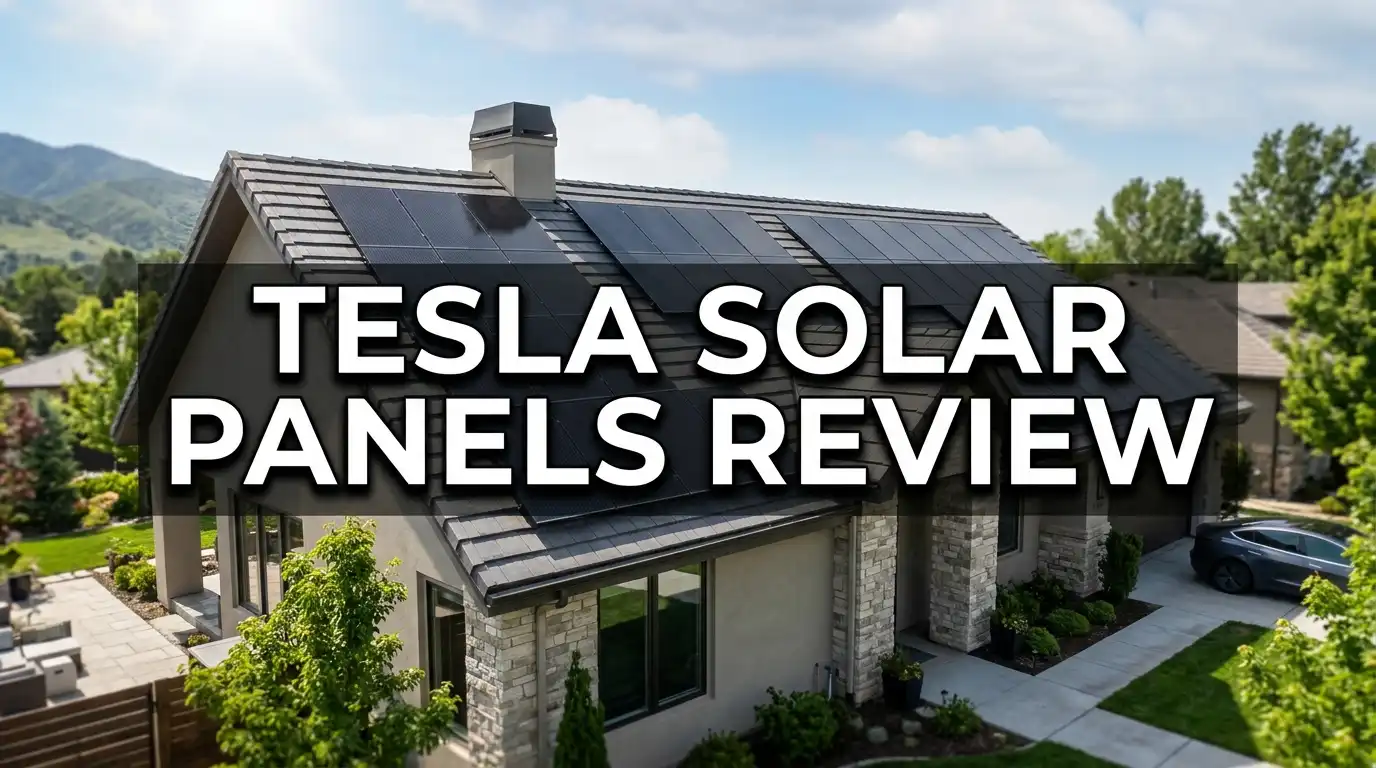
Tesla Solar Panels Review: Feature, Specs, & Is It Worth It?
Are you thinking about putting Tesla solar panels on your roof? You probably watched a sales video. You heard the promise of a $0 electric bill. Now you want the real story before you spend thousands of dollars. This review gives you that story.
We look at the true cost, the actual specs, the warranty details, and the honest pros and cons. We pulled data from Tesla, energy research groups, and real customers.
By the end, you will know if Tesla solar fits your home and your budget. Keep reading. The numbers below might surprise you.
In A Nutshell
Here is a quick summary before we dig into the details. This section gives you the main facts fast.
- Tesla solar panels produce 400W to 460W per panel with an efficiency rating between 19.3% and 22.5%. That is competitive, but not the best on the market.
- The average cost sits between $2.74 and $3.30 per watt before incentives. A standard 8 kW system runs around $21,920 to $26,400 before the tax credit.
- The 30% federal tax credit cuts your net price a lot. Most owners pay $15,344 to $18,480 for an 8 kW system after the credit.
- Tesla offers a 25 year performance warranty on panels and a 10 year warranty on the Powerwall 3 battery.
- The payback period runs 6 to 12 years depending on your electric rate, your state, and how you pay.
- Tesla shines with transparent online pricing and ecosystem integration, but customer service and subcontractor quality remain weak spots.
What Are Tesla Solar Panels?
Tesla solar panels are flat photovoltaic modules built for home rooftops. They turn sunlight into electricity you can use in your house. The panels use monocrystalline silicon cells, which are the type known for good efficiency and a clean look. Tesla designs every panel with an all black finish. This gives your roof a low profile and modern appearance that many homeowners love.
The system works in three steps. First, the panels create DC power from sunlight. Second, an inverter changes that DC power into AC power your home can use. Third, your house pulls from that power before it takes anything from the grid. It is a simple flow.
Tesla builds these panels as part of a larger energy system. The panels connect to the Powerwall battery and the Tesla app. All parts talk to each other without extra hardware. This native connection is a real strength. You get one app to watch your power, your battery, and your usage. You avoid the compatibility headaches that come with mixing brands.
One thing sales reps skip is this: efficiency does not equal output. Efficiency tells you how well a panel uses each square foot of sunlight. Your real output depends on your roof angle, your region, and your local weather. So keep that in mind as you read the specs below.
Tesla Solar Panel Specifications and Performance
Tesla’s current panel lineup, like the popular T400H model, delivers strong numbers. The T400H produces 400W of rated power with a 20.4% efficiency rating. Some newer configurations reach up to 22.5%. The panels measure about 71 inches by 44 inches and handle temperatures from -40°F up to 185°F. This wide range means they work in cold winters and hot summers.
The power tolerance sits at 0 to +5W. That means your panel never produces less than its rated wattage under lab conditions. It might even give you a little extra. This is a good sign of quality control.
Now for the number nobody mentions: the temperature coefficient. Tesla’s coefficient runs around -0.34% per degree Celsius above 25°C. Here is what that means for you. On a hot July day, your roof surface can hit 55°C. At that heat, each panel loses about 9% of its rated output before any shade is counted. A 440W panel acts like a 400W panel in real summer heat. This is not a Tesla flaw. It is physics that hits every brand.
Tesla also builds in a degradation rate of about 0.5% per year. So a panel making 440W today will make roughly 385W by year 25. The panels also use power zones, a shade design that keeps unshaded sections working at full speed even when one part sits in shadow. This helps homes with chimneys, trees, or complex roof lines the most.
How Much Do Tesla Solar Panels Cost?
Cost is the question everyone asks first. In 2026, a Tesla solar installation costs about $2.74 to $3.30 per watt before any incentives. This range comes from Department of Energy benchmark data. Your total price depends on the size of your system.
Here is a simple breakdown. A small 4 kW system costs around $10,960 to $13,200 before the tax credit. A standard 8 kW system runs $21,920 to $26,400. A larger 12 kW system costs $32,880 to $39,600. And a big 16 kW system reaches $43,840 to $52,800. These are pre incentive numbers.
The best part is what happens after the 30% federal tax credit. That 8 kW system drops to a net cost of $15,344 to $18,480. That is a large saving. The credit applies to the full qualified cost, so bigger systems save more in raw dollars.
One thing sets Tesla apart. Tesla shows its prices online before you talk to anyone. Most solar companies force a sales call before they share a single number. Tesla’s transparency is genuinely rare and helpful. But remember, that online price reflects a standard system design, not your specific roof. Costs can rise if you need a main electrical panel upgrade, which runs $1,500 to $3,000 and is common in older homes. Always compare total cost, not just the per watt number.
Tesla Powerwall 3 Battery Storage
Many buyers pair their panels with the Tesla Powerwall 3. This battery stores the power your panels make so you can use it at night or during an outage. The Powerwall 3 holds 13.5 kWh of usable energy and delivers up to 11.5 kW of continuous power. It peaks at 22 kW for short bursts. It also carries a 10 year warranty.
Here is how it works with your panels. During the day, your panels make power. Your home uses what it needs. The extra power flows into the Powerwall instead of back to the grid. At night, or when the grid goes down, the battery powers your home. The round trip efficiency sits near 90%, so you keep about 9 kWh for every 10 kWh you store.
The Powerwall adds about $9,200 to $11,500 to your system cost. After the tax credit, that net cost drops to around $6,440 to $8,050. Whether it pays off depends on your utility. In states with time of use pricing, where evening power costs two or three times more than midday power, the battery saves real money. In flat rate states, the battery mostly gives you backup peace of mind, not daily savings.
Two smart features stand out. Time based control charges the battery when power is cheap and discharges it when power is costly. Storm Watch watches weather alerts and fills your battery before a storm hits. Both work through the Tesla app. Just note that Storm Watch needs an internet connection to update.
Top 3 Alternatives for Tesla Solar Panels
Tesla panels need professional rooftop installation and are not sold directly to consumers online. If you want solar power you can buy today, set up yourself, and use for RVs, cabins, backup, or off grid needs, these three options are strong picks. Each one is a trusted brand with proven performance.
The Renogy 100W 12V Solar Panel Starter Kit is a favorite for beginners. It comes with a monocrystalline panel, a 30A charge controller, cables, and mounting brackets. It is perfect for RVs, campers, and small off grid setups.

- 【Efficient Performance】This Starter Kit can generate an average of 500Wh of electricity per day (varies with sunlight...
- 【Market-Leading Service Plan】Enjoy worry-free usage with our market-leading service plan, providing 10 years of coverage...
- 【Exceptional Safety】Certified by UL 61730, CSA C22.2#61730, IEC 61730/IEC 61215, our solar panel withstands 2400Pa wind...

Last update on 2026-07-31 / Affiliate links / Images from Amazon Product Advertising API
The ECO-WORTHY 200W Solar Panel Kit gives you more power for a fair price. It includes high efficiency monocrystalline panels and a 30A PWM charge controller. This kit suits larger RVs, caravans, and cabins that need more energy.

- [Wide Application]: Daily Output 800wh/day under 4 hours full sunshine condition. Perfect for RV, Caravan, Marine, Camper...
- [Excellent Performance]: ECO-WORTHY solar panels use high-performance monocrystalline solar cells, which can provide up to...
- [Durable]: Corrosion-resistant aluminum alloy frame, so that the panel can be used for decades, and can withstand strong wind...
Last update on 2026-07-31 / Affiliate links / Images from Amazon Product Advertising API
The Jackery SolarSaga 100W Portable Solar Panel is the top choice for portability. It folds up, weighs little, and pairs with Jackery power stations. It is ideal for camping, hiking, and emergency backup power on the go.

- Easy Setup & Kickstand Included: The Jackery Solarsaga 100X features 2 kickstands that can be placed firmly on any surface...
- Higher Energy Conversion Rate: Covered by monocrystalline silicon solar cells, the portable solar panel adopts PERC solar...
- Durable & Splash-proof: The ETFE-laminated case is durable enough to extend the lifespan of the solar panel. The IP...
Last update on 2026-07-31 / Affiliate links / Images from Amazon Product Advertising API
Tesla Solar Roof vs Standard Panels
Tesla also sells the Solar Roof, which is different from standard panels. Instead of placing panels on top of your roof, the Solar Roof replaces your whole roof with solar shingles. These tiles act as both roofing material and power generators. The look is seamless and beautiful.
But the price is steep. The Solar Roof costs $35,000 to $70,000 or more, compared to $15,000 to $40,000 for standard panels. The cost per watt jumps to $5.50 to $7.00, more than double the price of regular panels. The efficiency is also lower because the tile design limits how much cell area fits on your roof.
So who should choose it? The Solar Roof makes sense for a specific person. You need a full roof replacement anyway. You have strong feelings about looks and dislike visible panels. And you live in a high electric rate area where the premium can slowly pay back.
Here is the smart way to think about it. If your roof needs replacing in the next few years, the math changes. You are no longer comparing panels against a Solar Roof. You are comparing panels plus a new roof against a Solar Roof. In that case, the gap narrows. For most people with a good roof already, though, standard panels remain the better financial choice.
The Federal Solar Tax Credit Explained
The federal Residential Clean Energy Credit is the biggest money saver in solar. It lets you subtract 30% of your qualified system cost from your federal taxes. This is not a deduction. It is a dollar for dollar credit. For a $25,000 Tesla system, that means a $7,500 direct reduction in what you owe the IRS. This credit stays at 30% through 2032.
Here is a key rule. The credit is not a check or a rebate. It reduces your tax bill in the year your system gets Permission to Operate. If your tax bill is smaller than the credit, the unused part carries forward to the next year. So you need enough tax liability to use the full credit. This matters a lot for retirees or low income households.
Timing matters too. The credit applies to the year your system is placed in service, meaning the PTO date, not the install date. If your install finishes in December but the utility grants PTO in January, your credit shifts to the next tax year. Plan around this if you install late in the year.
Both Tesla panels and the Powerwall 3 qualify for the credit. The Powerwall qualifies whether you install it with solar or on its own. The EV charger does not use this credit. It uses a separate one. Beyond the federal credit, many states add their own rebates, property tax exemptions, and net metering programs. Check the DSIRE database for your state’s offers.
Tesla Solar Installation Process
Tesla runs its installation in five clear steps. It starts online and ends when your system turns on. The physical install usually takes just one to two days. But the full timeline from quote to power on runs two to five months, mostly because of permitting.
First comes the online quote. You enter your address and your monthly bill. Tesla uses satellite images to design a rough system and show a price. No sales call needed. This step is fast and honest, but treat the price as a starting point, not a final bill.
Second is the site assessment. After you place a deposit, a Tesla rep checks your actual roof, your electrical panel, and your structure. This is where surprise costs like panel upgrades appear. Third comes permitting, the longest step. Tesla files the paperwork, but your local government controls approval speed. This can take 4 to 14 weeks.
Fourth is the install day itself, which is quick. Fifth is inspection and PTO. Your system must pass a local inspection before the utility lets you turn it on. You cannot legally run your system before this. One tip: ask if your crew is Tesla staff or a subcontractor. Get the answer in writing. It affects who handles any future repairs.
Tesla Solar Warranty Coverage
Tesla backs its panels with a strong warranty package. The headline is the 25 year performance warranty. This guarantees your panels keep at least 80% to 87% of their rated output after 25 years. If your panels drop below that level, Tesla repairs or replaces them.
But read the fine print. The warranty only triggers if degradation is worse than the guaranteed level. Normal decline within the range is not covered. So if your panel drops from 440W to 385W over 25 years, that is expected and not a claim. This is standard across the whole industry, so Tesla is not unusual here.
Tesla also offers a separate workmanship warranty. This covers install defects like bad mounting, wiring errors, and roof leaks caused by the crew. Roof penetration coverage is the part you most want to confirm. Solar mounts poke through your roof many times. If those holes are not sealed right, you get leaks. Tesla’s workmanship warranty covers leaks caused by install errors.
The Powerwall 3 carries its own 10 year warranty with a 70% capacity guarantee. Overall, Tesla’s warranty terms match the top tier of the industry. The real question is service speed. What matters most is how fast Tesla responds when you file a claim, and whether they have staff in your region to fix things quickly.
Tesla Solar Payback Period and ROI
The payback period is when your energy savings finally equal your net system cost. For most Tesla systems in 2026, this runs 6 to 12 years. That is a wide range, so let us break down what moves the number.
Five things drive your payback more than any spec. Your current electric rate. How much of your usage the system covers. Your net metering credit rate. Whether you paid cash or took a loan. And whether you have enough tax liability to claim the full credit. These matter far more than the brand of panel.
The 6 year end applies to homeowners in high rate states like California, Hawaii, and Massachusetts who pay cash and get good net metering. The 12 year end applies to owners in low rate states who financed with high dealer fees. Here is an honest example. An 8 kW system in a moderate rate state saves about $1,700 per year. At a net cost near $16,800, that gives a payback of roughly 10 years.
Be careful with sales projections. Many assume your electric rate rises at a steady 3% or 4% forever. Real rates do not move that smoothly. They jump in steps set by regulators. Over 25 years, a realistic savings range for that 8 kW system is $30,000 to $45,000, not a guaranteed $60,000. Solar also raises home value by about 4% and helps homes sell faster.
Financing Your Tesla Solar System
Tesla offers two ways to pay in 2026: cash or a solar loan. It does not offer leases or power purchase agreements. This choice affects your tax credit, your total cost, and how easy your home is to sell later.
A cash purchase gives the lowest total cost. You pay the full price, claim the 30% credit, and skip all interest. The catch is obvious. $15,000 to $40,000 is a big chunk of money for most families. If you have the cash and a strong tax bill, cash almost always wins.
A solar loan lets you own the system while you spread payments over 10 to 25 years. You still claim the full tax credit. You still gain home value. But watch out for dealer fees. These fees run 10% to 20% of the loan amount and are often hidden. A $24,000 system with a 15% dealer fee actually costs $27,600 before interest. A smart move is to use your tax credit refund to make a big principal payment in year one. This cuts your total interest a lot.
Since Tesla skips leases and PPAs, buyers who cannot get a loan or want zero upfront cost must look elsewhere. Leases lower your upfront cost to near zero, but you do not own the system and cannot claim the credit. For most buyers who can afford to own, though, Tesla’s model keeps things simple at resale.
Tesla Solar Pros and Cons
Every product has strong points and weak points. Let us look at both sides so you can decide with clear eyes.
Where Tesla shines: The integrated ecosystem is the biggest win. Panels, battery, and EV charging work together with no third party compatibility issues. The transparent online pricing lets you see costs before any sales call, which is rare. The all black design looks clean and modern. And the Tesla app gives you strong monitoring of production, usage, and battery in one place. Storm Watch and smart battery features add real value in outage prone areas.
Where Tesla falls short: There are no lease or PPA options, so you must pay cash or qualify for a loan. Subcontractor quality varies, since not every crew is direct Tesla staff. Customer service has long been a pain point, especially for scheduling follow up visits. And you get limited competitive bidding, because buying Tesla means buying Tesla. You cannot take that design and shop it around to three installers.
So who should buy Tesla? You want panel, battery, and EV integration in one system. You are paying cash or have a strong tax liability. You value looks and want a flush black roof. And you live where Tesla has a real service presence. If you want to compare bids, need a lease, or have limited tax liability, a different installer may serve you better.
Frequently Asked Questions
Are Tesla solar panels worth it in 2026?
Tesla solar panels are worth it for the right homeowner. If you pay cash or have a strong tax bill, live in a high electric rate area, and value the integrated battery and app, the system pays off well. Your payback lands between 6 and 12 years. But the value depends on your electric rate and state policy, not the brand name.
How much do Tesla solar panels cost?
Tesla solar panels cost about $2.74 to $3.30 per watt before incentives. A standard 8 kW system runs $21,920 to $26,400 before the tax credit. After the 30% federal credit, most homeowners pay $15,344 to $18,480 for that same system.
How long do Tesla solar panels last?
Tesla solar panels last well beyond 25 years. The performance warranty guarantees at least 80% to 87% of rated output after 25 years. The panels degrade at only about 0.5% per year, so they keep producing useful power for decades.
Can I buy Tesla solar panels on Amazon?
No, Tesla solar panels are not sold on Amazon. Tesla only installs them through its own service with professional crews. If you want solar power you can buy and install yourself, portable kits from Renogy, ECO-WORTHY, and Jackery are strong options available online.
Is the Tesla Powerwall worth adding?
The Powerwall is worth it if you live in a time of use billing area or face frequent outages. It costs $9,200 to $11,500 installed, or $6,440 to $8,050 after the tax credit. In flat rate states, it mostly gives backup power rather than daily savings.
How efficient are Tesla solar panels?
Tesla solar panels have an efficiency rating between 19.3% and 22.5%. The popular T400H model reaches 20.4% efficiency. This is competitive with the industry, though a few premium brands like SunPower Maxeon push slightly higher at nearly 22.8%.
Final Thoughts
Tesla solar panels are a solid, well built product with a clean look and a smart ecosystem. The transparent online pricing and native battery integration are genuine strengths. But Tesla is not the automatic best choice for everyone.
Your electric rate, your state, your roof, and how you pay all shape whether the system pays off. Compare a Tesla quote against a local installer using total cost, not just per watt price.
Do the math on your own bill. If the numbers work and you value the ecosystem, Tesla solar can be a smart 25 year investment for your home.

Lufy combines years of electrical expertise with a passion for emerging technology to deliver honest, detailed reviews of tools, machines, and gadgets. Through electrokit.blog, Lufy empowers readers with practical insights and comparisons to choose the best electrical equipment for their needs.


