Litheli 21V Cordless Leaf Blower Review: Airflow, Weight & Yard Performance
Leaves pile up fast in the fall, and raking them by hand can take hours. Many people reach for a noisy gas blower, but there is a quieter way to get the job done.
A cordless leaf blower makes yard cleanup easier. You skip the power cord, so you can move freely around the lawn. There are no exhaust fumes or loud engine noise either.
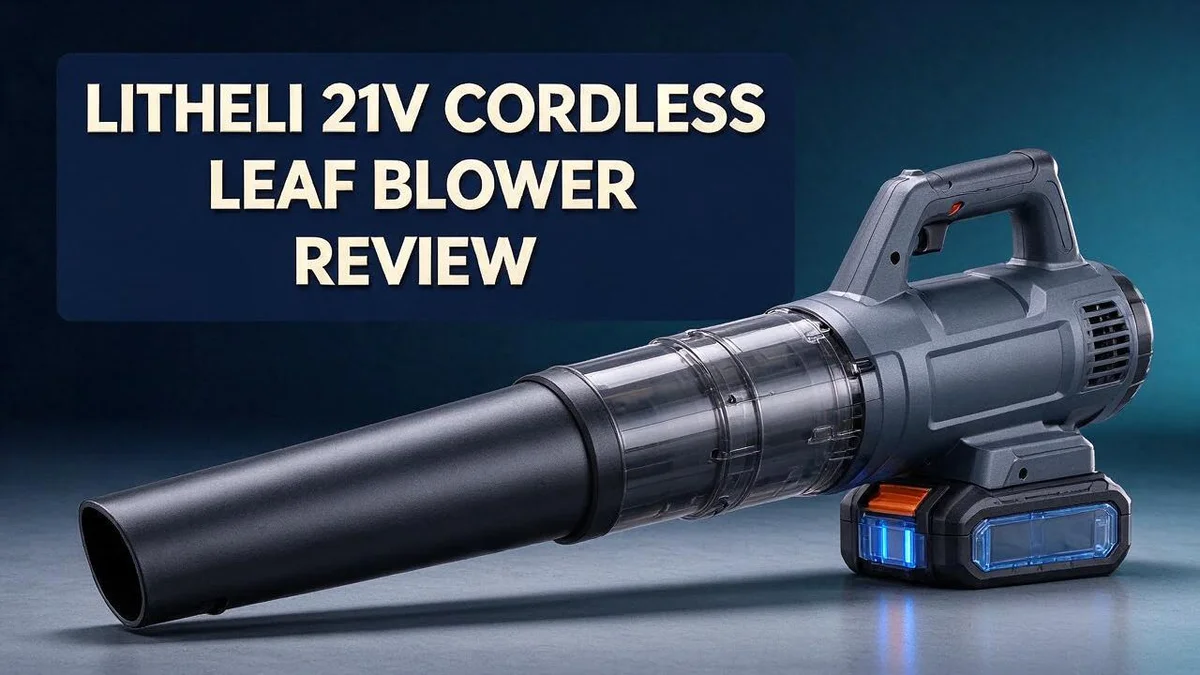
This review looks at the Litheli 21V Cordless Leaf Blower. It works well for patios, driveways, and garden beds. It also offers mulching and vacuuming functions.
Battery size matters. Runtime depends on the model and how hard you use it. Keep reading to see if this blower fits your yard.
In a Nutshell
- Model versions vary. Listings show 20V, 21V, and 40V options, so check the exact model before you choose.
- Most details come from listings. The main features are not yet proven by hands-on tests, so treat claims as a starting point.
- Quiet motors suit early mornings. Electric blowers run quieter than gas models, so weekend cleanups feel less disruptive to neighbors.
- Extra modes add versatility. Some versions offer mulching and vacuuming, which can help with garden debris beyond simple blowing.
- Mode changes need no tools. You can switch functions quickly, so one machine can handle several yard jobs.
- Plan for short work bursts. Listings cite about 12 minutes at full power, so split large jobs into smaller sections and keep a spare battery nearby.
Airflow and Blowing Power

- Lightweight & Effortless Control : Weighing just 4.4 lbs with battery, the Litheli Handy+ cordless leaf...
- Dual Batteries for Extended Runtime : Comes with two 2.0Ah lithium-ion batteries for longer working time...
- Powerful & Precise Airflow : Driven by a 17,000 RPM motor and delivering up to 350 CFM, this blower...

Last update on 2026-11-01 / Affiliate links / Images from Amazon Product Advertising API
When you shop for a leaf blower, airflow matters more than almost anything else. It decides how quickly leaves move across your lawn. Good airflow means fewer passes and less time spent on cleanup.
Two numbers describe airflow on most listings. The first is CFM, which measures the volume of air moved each minute. The second is MPH, which measures how fast the air leaves the nozzle.
CFM and MPH measure different things. High CFM pushes a large pile of leaves along the ground. High MPH lifts lighter debris and reaches into corners, under shrubs, and along fence lines.
The research shows conflicting numbers for this Litheli model. One listing for a 40V version shows 572 CFM and 112 MPH. Another listing shows up to 85 MPH and 350 CFM at max air volume.
These gaps may come from different models or voltages. Check the exact model number on the box before you make a choice.
Wet leaves need more force. Damp leaves stick to the lawn and resist movement. Strong CFM helps break them loose. Dry leaves usually move with much less effort.
Think about your yard size. A small patio needs little power. A large lawn with many trees may need higher airflow numbers. Match the airflow to the job rather than chasing the biggest number.
Airflow also shapes your working pace. Strong air lets you clear a wide strip in one pass. Weaker air often means going over the same spot again.
Hard surfaces like driveways and patios need a firm push of air too. Loose leaves on these areas can blow back if the airflow is weak.
Keep in mind that these figures come from listings, not hands on tests. Real results may differ from the printed specs. Try a short test on a small patch of leaves first.
Adjust your approach as you go. Start on the lighter areas and save the heavy piles for last. This keeps your pace steady.
Weight and Handling
A leaf blower stays in your hands for long stretches, so its weight shapes how you feel after an hour of work.
The research describes this Litheli model as lightweight. That claim has not been confirmed by real world testing, so treat it as a starting point.
Weight alone does not tell the full story. Balance matters just as much. A tool with its weight near the nozzle feels heavier than one with its weight near your hands.
Battery placement can shift the balance. Many cordless blowers place the battery toward the back, which helps the tool sit more evenly in your grip.
Grip shape affects control too. A comfortable handle lets you keep your wrist relaxed. Look for a textured surface that stays firm when your hands get sweaty.
Posture matters just as much as the tool. Hold the blower close to your hip instead of stretching it out in front of you. This move reduces strain on your shoulders and lower back.
Short sessions feel easier. Take a break every fifteen minutes or so. Switch hands often. These small habits keep your arms fresh for the whole job.
A shoulder strap can help on larger properties. It spreads the load across your body instead of your arms. Check whether a strap comes with the blower or sells separately.
Storage affects handling too. A compact blower is easier to lift from a shed or garage shelf. Carry it by the handle with the nozzle pointing down.
Test the feel first. Lift the tool and hold it at arm length for thirty seconds. If your arm starts to shake, the weight may feel too heavy over time.
Overall, the Litheli looks promising for easy handling on paper. Confirm the exact weight in the listing before you decide, since model versions vary.
Noise and Operating Comfort
Noise shapes how a leaf blower feels to use. Electric models often sound softer than gas engines, but the research does not list a decibel rating for this Litheli model. Listings rarely share sound data, so check with the seller.
High speed settings usually sound louder than low settings. Use the lower setting for light sweeping on patios and short paths. Save full power for heavy piles only.
Neighbors notice sound more than you might expect. Check local rules on blowing hours before you start. Many towns set quiet hours for yard equipment.
Hard surfaces make noise seem louder. Driveways and patios bounce sound back at you. Grass soaks up sound, so yards often feel calmer than paved areas.
Plan your order of work with noise in mind. Start with lighter tasks first. Save the loudest jobs for daytime hours, when neighbors expect yard activity.
Hearing protection still helps on long jobs. Foam plugs or earmuffs cut noise that builds up over an hour. Even a quieter tool can wear on your ears over time.
Vibration affects comfort in a different way. A smooth motor sends less buzz into your hands and arms. Stiff vibration can cause tingling in the fingers after long sessions.
Heat plays a role too. Summer work in direct sun can leave you sweaty and tired. Choose cooler hours like early evening, and drink water often.
Wind direction changes the experience. Blow debris away from windows, doors, and seating areas. Working with the breeze keeps dust off your face and eyes.
Dust brings its own comfort concern. Wear safety glasses and a dust mask when leaves are dry. Clean air makes a big difference to your breathing and focus.
Overall, comfort depends on sound, vibration, heat, and dust together. The research gives a good starting point, but your own test will show the real result.
Top 3 Alternatives
Ryobi ONE+ Blower

Last update on 2026-11-01 / Affiliate links / Images from Amazon Product Advertising API
If you already own other Ryobi tools, this blower is a smart choice. It uses the same battery platform, so one battery can power many tools around your home. It feels light in your hand and handles everyday yard cleanup with ease. Many homeowners like its simple controls and quick start. It works well for small to medium yards, decks, and driveways where you need steady performance without a lot of fuss.
EGO Power+ Blower

- TURBO MODE: Battery powered leaf blower lets you power though wet leaves, caked on grass, rocks, and...
- UP TO 90 MINUTES OF RUNTIME: A single charge of the included two 4.0Ah batteries lets you work with the...
- DIGITAL DISPLAY: Monitor blower performance, battery charge status, and cruise-lock in real time on the...
Last update on 2026-11-01 / Affiliate links / Images from Amazon Product Advertising API
This blower offers strong airflow for bigger jobs. Its large battery keeps going through long sessions, so you spend less time waiting for a recharge. Many users say it clears wet leaves and grass clippings fast. The variable speed trigger gives you control around flower beds and tight corners. Pick this model if your property is large and you want extra power for heavy seasonal cleanups.
Greenworks 24V Blower

- High-Performance Airflow for Everyday Cleanup - Provides up to 270 CFM airflow and 130 MPH air speed...
- Brushless Motor with Intelligent Power Control - Built with a high-efficiency brushless motor and...
- Long-Lasting Battery & Fast USB-C Charging - Includes a 3Ah Type-C rechargeable battery with up to...
Last update on 2026-11-02 / Affiliate links / Images from Amazon Product Advertising API
This option keeps things simple and easy to use. It offers a good balance of power and comfort for people who want to get work done without strain. The lighter frame reduces pressure on your arms and back. It works well for quick cleanups after storms or busy weekend chores. Choose this blower if you want a practical, comfortable way to start with cordless yard care.
Yard Coverage and Runtime on Full Cleanups
Runtime decides how far you get on a full cleanup. A cordless blower frees you from a cord, but the battery sets the clock.
The research points to about 12 minutes at max power on the 20V listing. That figure feels short for a large lawn, so plan your work around it.
Keep in mind that these numbers come from product listings, not field tests. Your real runtime depends on how hard you push the tool.
Lower speed settings stretch each charge much further. Save max power for wet piles and heavy debris. Light sweeping on dry grass can run on a gentler setting.
Mulching and vacuuming modes may draw more energy than plain blowing. Check which mode you use most often. Switch modes only when the job truly needs it.
Battery count matters a lot. The LEAPUL 21V uses two 2.0Ah batteries, so swapping packs can keep you moving. Keep a spare pack charged and ready.
Split the yard into zones. Clear the front lawn first, then the side path, then the back patio. Each zone gives the battery a natural pause point.
Charging takes time too. While one pack charges, the other keeps you working. A simple rotation keeps the cleanup moving without long waits.
Track your progress by section, not by minutes. Mark each finished zone with a small leaf pile. This stops you from repeating work you already completed.
Cold weather can cut battery output. Store packs indoors at room temperature. Bring them inside before a morning session for better power.
Test your timing on one small section first. Note how many minutes the battery lasts on that patch. Use that number to estimate the full yard.
Overall, a spare battery turns a short runtime into a workable plan. Many medium yards can finish in one session with a second pack. Larger properties will need planned breaks and fresh batteries.
Setup, Controls and Tool-Free Switching
Setting up the Litheli cordless leaf blower takes only a few minutes. Most steps need no special tools. You can start working soon after you open the box.
Begin by checking the parts. Confirm that the battery and charger are in the box. Compare everything with your order before you charge anything.
Charge the battery first. Plug the charger into a wall outlet. Wait until the indicator shows that charging is complete.
A full charge gives you the best start. Charging before first use also helps you learn how long the pack lasts.
Attach the battery securely. Slide the pack into the base until it clicks. A loose battery can cause sudden power drops during use.
Learn the controls before you start. Locate the main trigger, the power switch, and the function selector. Hold the blower in a neutral position first.
Press each control slowly. Notice how each one responds. This helps you avoid surprises when you work outdoors.
Understand tool free switching. The research highlights tool free function switching for this model. You change modes without extra parts or a screwdriver.
This saves time when you move between jobs. You might clear a path, then break down leaves in a flower bed. Quick changes keep the work flowing.
Check the mode before each job. Blowing suits open lawns and driveways. Mulching helps you break down fallen leaves on garden beds.
Vacuuming gathers debris when your setup includes that option. Always confirm the mode before you press the trigger.
Test every switch on a short run. Run the tool for about thirty seconds on a clear patch. Listen for smooth changes and watch for stuttering.
If something feels wrong, stop and check the battery seating. Then review the manual for guidance.
Keep the manual nearby. Listings can differ on model details, so the manual gives the final answer. Read the safety notes before your first full job.
Pros and Cons
Pros
- Lightweight design makes longer sessions easier on your arms.
- No exhaust fumes means you can work close to the house.
- No pull cord to fight before you start.
- Mulching and vacuuming modes add more uses for one tool.
- Cordless freedom lets you move across the yard without dragging a cord.
Cons
- Listings show 20V, 21V, and 40V, so check the exact model before you buy.
- Airflow and speed numbers come from listings, not independent tests.
- Mulching and vacuuming performance needs more real-world proof.
- DeWalt has a longer track record in cordless blowers.
Who Should Buy It
Homeowners with small to medium yards fit this tool best. A typical suburban lot gives you enough space to finish in one session.
Renters and apartment dwellers can also benefit from this setup. Balconies, small patios, and entry paths often need only a quick pass.
Families with kids and pets may appreciate fast cleanups. Play areas and sidewalks can be cleared in minutes, then the tool goes back on the wall.
Shoppers who mainly sweep leaves from hard surfaces will feel right at home. Driveways, decks, and patios respond well to steady airflow.
People who live close to neighbors should weigh the noise level. The research calls the design quiet, but that claim needs real world testing. Early morning chores feel more polite with a quieter tool.
Older adults and people with limited storage may appreciate a single compact tool. Fewer tools mean less clutter in a small garage.
Owners with large acreage should look elsewhere. Big lots demand longer runtime and steady high power, which a cordless model may not deliver.
Buyers who already own compatible batteries have a head start. Matching packs mean one less charger on the shelf.
Anyone who wants a single brand for lawn tools should compare battery ecosystems first. Battery sharing can shape the best choice for years.
Beginners who want an easy first tool may feel at ease with a simple machine. Short practice sessions build confidence before tackling big jobs.
Tip for the careful shopper: read recent reviews from real owners. Their experience fills gaps that product listings leave out.
Ultimately, the best buyer wants quick, clean cleanups over raw power. If that sounds like you, this blower deserves a close look.
Final Verdict
The Litheli 21V cordless leaf blower earns a spot on your shortlist. It offers a light build, quiet operation, and no exhaust fumes. The research still leaves some gaps, so close them before you commit.
Confirm the exact model first. Listings show 20V, 21V, and 40V versions. Read the model number on the box and check the battery size. This one step prevents most surprises.
Plan around the runtime. The 20V listing shows about 12 minutes at full power. That works well for a quick patio sweep. For a bigger cleanup, keep a spare battery nearby.
Real performance still needs proof. Airflow and speed figures come from product pages, not independent tests. Mulching and vacuuming also need more real-world checks.
Compare the main alternatives. The LEAPUL 21V uses two 2.0Ah batteries. DeWalt has a longer history with cordless blowers. Ryobi and XO fit the 20 to 24V class. Look closely at each brand’s battery system, since that shapes future tool purchases.
Run a simple test. Start with your heaviest task, such as clearing wet leaves from a driveway. Time how long the battery lasts and note how loud the tool sounds in your space. Keep notes on each test so you can compare brands side by side. A short trial often reveals more than a long list of features.
Check the return policy before you buy. A clear return window lets you test the blower at home. Look for the warranty terms too. These details protect you if performance falls short.
Plan your storage space. The compact body fits a garage shelf or a closet corner. Hang it near the door so you can grab it fast.
The final take is clear. The Litheli suits people who want a light, easy tool for regular tidy up jobs. Confirm the model, plan for runtime, and compare alternatives first. With those steps done, you can buy with confidence.
Frequently Asked Questions
Can I switch modes without tools?
Yes, this blower offers function switching without tools. You can move between blowing, mulching, and vacuuming without grabbing a screwdriver. This helps when your yard needs more than one job done.
Should I buy a spare battery for big jobs?
Runtime is short, so a spare battery can help. Keep a charged pack nearby if your cleanup runs longer than one charge. Check that any spare matches your exact model before you order.
What numbers should I compare on a listing?
Look at CFM, MPH, and the battery rating in Ah. Higher CFM usually moves more debris at once. Listings can differ, so only compare numbers for the same model and voltage.
Can I use it for gutter cleaning?
The research does not confirm gutter use. Check the product details first. If you do try it, use a stable ladder and keep both feet on solid ground.
Where should I store it between uses?
Its light build makes wall storage easy. Hang it on a hook in your garage or shed to keep it off the floor and ready for the next job.

Lufy combines years of electrical expertise with a passion for emerging technology to deliver honest, detailed reviews of tools, machines, and gadgets. Through electrokit.blog, Lufy empowers readers with practical insights and comparisons to choose the best electrical equipment for their needs.