
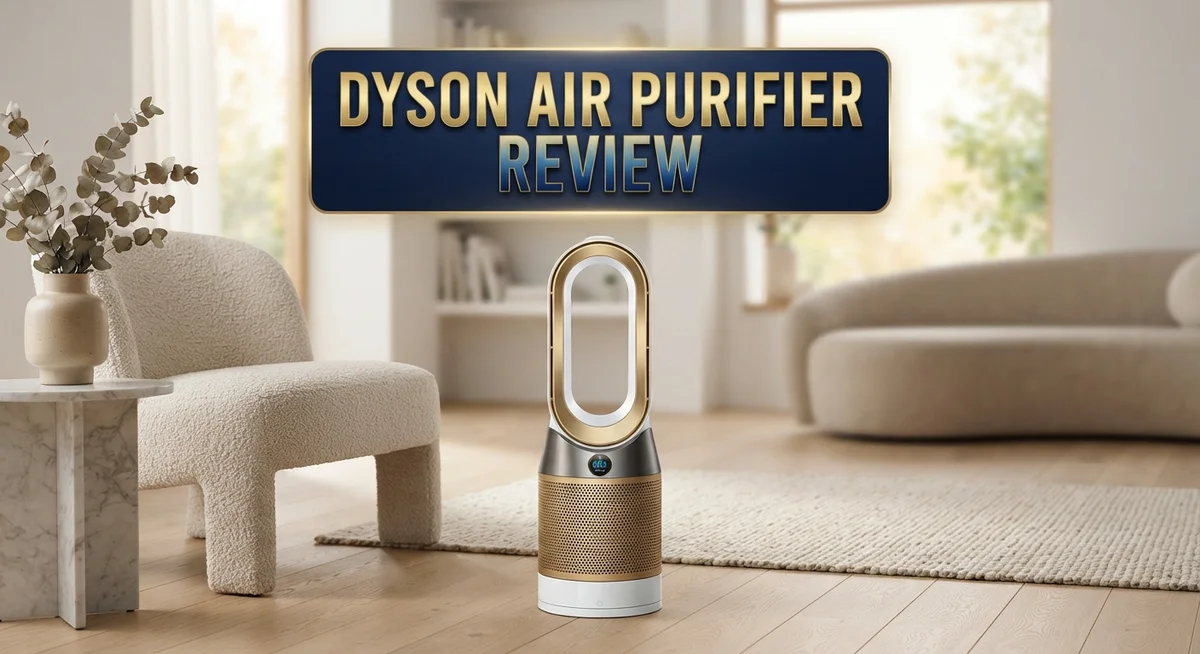
Dyson Air Purifier Review: Features, Performance & Comparison
Looking for clean air and a sleek design in one device? Dyson air purifiers promise both. But do they truly deliver on that promise?
These devices combine a fan and a purifier in one unit. They capture 99.97% of particles as small as 0.3 microns. That sounds impressive on paper.
Models like the TP07 and TP10 Gen1 bring smart features to your home. You get real time air quality monitoring right at your fingertips. The 350° oscillation spreads clean air across every corner of your room.
But here is where things get interesting. Some reviews question the actual CADR performance of these units. Filters often stay surprisingly clean, which raises questions about real world effectiveness.
So does the sleek design and smart tech make up for these concerns? We put Dyson air purifiers under the microscope. This review breaks down the specs, pros, and cons you need to know.
You will also see how Dyson stacks up against competitors like Levoit and Philips. By the end, you will know if this purifier fits your home and your air quality needs.
In a Nutshell
Here is the quick summary of what you need to know about Dyson air purifiers.
-
Filtration power: These devices capture 99.97% of particles as small as 0.3 microns. This makes them strong against dust, pollen, and allergens.
-
Dual function: Every unit works as a fan and purifier at once. You get cooling airflow and clean air from a single machine.
-
Smart control: Models like the TP07 offer real time air quality monitoring. You can track results right from the display or app.
-
Wide airflow reach: With 350° oscillation and strong airflow output, air moves across your room fast. This helps purified air reach every corner.
-
The catch: Independent tests show weak CADR scores. This means Dyson may filter slower than dedicated purifiers like Levoit or Philips.
-
Energy use: Heating modes pull more power than standard purifying fans. Your energy bills may reflect this over time.
Bottom line: Dyson blends design and smart tech well. But dedicated purifiers may still beat it on raw filtration speed.
Filtration Technology and Particle Capture
Dyson air purifiers use a multi-stage filtration system that works hard to capture harmful particles from your air. The primary filter catches larger debris and dust. A HEPA filter then traps smaller particles down to 0.3 microns in size.
Here’s what makes this effective: Dyson claims their units capture 99.97% of particles at that 0.3 micron threshold. This includes dust, pollen, pet dander, and other common indoor pollutants. The filtration happens as air passes through the sealed filter chamber.
The oscillation feature plays a key role in particle capture too. With 350° rotation, the purifier spreads cleaned air throughout your room instead of just one direction. This means more air cycles through the filter over time. Your entire space gets treated, not just the area directly in front of the unit.
Dyson models like the TP07 and TP10 Gen1 maintain consistent airflow at up to 76 gallons per minute on maximum speed. This high volume matters because it pushes more contaminated air through the filters. More air movement equals more particles removed from your breathing space.
One important note: independent testing reveals a weakness here. While the filtration rate is strong, the CADR (Clean Air Delivery Rate) scores lag behind dedicated air purifiers. CADR measures how quickly a unit cleans air in a real room. Dyson’s dual function as both fan and purifier means it sacrifices some purification power for versatility.
The filter itself remains relatively clean during use, which some see as proof the system works. Others question whether this means the filters aren’t being fully utilized. Either way, regular filter replacement keeps the purification effective.
Bottom line: Dyson delivers solid particle capture through proven HEPA filtration and smart oscillation. The 99.97% capture rate is genuine. However, if pure air cleaning speed is your main goal, dedicated purifiers may serve you better.

- Engineered to keep air cleaner in spaces where it matters most. Covers up to 203 ft² (4.8 ACH) for thorough whole-room...
- Compact and powerful, yet quiet. Engineered for minimal disturbance.
- With Dyson air purifiers, the whole machine is fully sealed. Which means they don’t emit pollutants and allergens¹ back...
Last update on 2026-08-06 / Affiliate links / Images from Amazon Product Advertising API
Design, Build Quality, and Space Efficiency
Dyson air purifiers stand out for their thoughtful engineering and compact footprint. These units fit seamlessly into modern living spaces without dominating your room.
The frame uses aluminum and plastic construction that feels solid in hand. Models like the TP07 weigh around 10.4 to 10.8 pounds, making them light enough to move between rooms. The sleek cylindrical tower design sits neatly in corners or beside furniture.
What makes Dyson unique is the dual functionality. You get a fan and air purifier working as one device. This means you save floor space compared to buying two separate units. The 350° oscillation feature spreads purified air across your entire room without taking up extra space.
The build quality reflects Dyson’s premium approach. Surfaces resist dust buildup and the materials feel durable. The control panel sits at the top with simple buttons for speed adjustment and monitoring. Real time air quality displays give you instant feedback on your room’s air status.
One practical consideration: the 5.9 foot cord length limits placement flexibility. You’ll need an outlet within reasonable distance. The unit’s narrow base provides stability without wobbling, even at higher fan speeds.
The oscillation mechanism runs smoothly across its full range. This continuous movement ensures consistent air circulation throughout your space. Unlike stationary purifiers, Dyson models actively distribute clean air rather than just filtering air near the unit.
The filter compartment sits at the base for easy access. Replacing filters requires minimal effort, though you’ll need to purchase replacements periodically. The design keeps maintenance straightforward without complex disassembly.
Dyson’s aesthetic appeal matters too. The minimalist look complements contemporary home decor. Available in white and black finishes, these units blend into most interiors rather than standing out as clunky appliances.
The overall design philosophy prioritizes both form and function. You get a device that performs air purification while maintaining a modern, unobtrusive appearance in your home. This balance between capability and aesthetics explains why many homeowners choose Dyson despite other options available in the market.
Smart Features and Real-Time Air Quality Monitoring
Dyson air purifiers include smart monitoring features that help you track air quality in real time. The TP07 model stands out with its ability to display pollution levels directly on the device. You see live updates about what’s in your air without opening an app.
The sensors inside detect particles and gases continuously. These readings appear on the LCD screen, so you know exactly what you’re breathing. The data updates every few seconds, giving you accurate information about your indoor air.
Real-time monitoring matters because it changes how you use the purifier. When air quality drops, you can increase the speed manually or let the auto mode kick in. The device adjusts fan speed based on what the sensors detect. This means you’re not running the purifier at full power when you don’t need to.
The app connectivity on Dyson models lets you monitor air quality from your phone. You can check pollution levels even when you’re away from home. The app shows historical data too, so you see patterns over days and weeks.
Dyson purifiers give you control over the oscillation feature through the app. You can turn the 350° sweep on or off remotely. This flexibility helps you direct clean air exactly where you need it most.
The smart features integrate with voice assistants on some models. You can ask your device to turn on the purifier or check the filter status. This hands-free control makes the purifier part of your smart home setup.
One thing to note: the filter status updates help you know when replacement is needed. The system tracks filter life and alerts you before performance drops. This keeps your purifier working at peak effectiveness.
The display shows multiple metrics at once. You see particle count, gas levels, and fan speed information simultaneously. This comprehensive view helps you understand your air quality situation clearly. Smart features make Dyson purifiers more responsive to your actual air conditions rather than running on fixed schedules.
Top 3 Alternatives
Levoit Core Air Purifier

- WHY CHOOSE AHAM VERIFIDE AIR PURIFIERS: AHAM (Association of Home Appliance Manufacturers) is an ANSI-accredited organization...
- HIGH-PERFORMANCE AIR PURIFICATION: A powerful 56W high-torque motor and 143 CFM CADR delivers fast, effective cleaning. The...
- AHAM VERIFIDE, PROVEN PERFORMANCE: AHAM VERIFIDE with a CADR (Clean Air Delivery Rate) rating of 143 CFM for smoke, 153 CFM...

Last update on 2026-08-06 / Affiliate links / Images from Amazon Product Advertising API
The Levoit Core Air Purifier works well for people who want simple air cleaning. This machine uses a three-stage filtration system that catches dust, pollen, and pet hair. The pre-filter captures large particles first, while the activated carbon filter removes odors. The HEPA filter then traps tiny pollutants that other filters miss.
You get quiet operation with this model. Most users report that it runs without much noise, making it ideal for bedrooms or offices. The compact design fits easily in any room without taking up much space.
Coway Airmega Filter

- 【Perfect for AP-1512HH Air Purifiers】: Fully compatible with Coway Airmega AP-1512HH and Airmega 200M (AP-1518R) Air...
- 【High Efficiency Filtration】: Our ap-1512hh filter replacement for coway combined with high efficiency filtration system...
- 【Premium Quality】: Our AP-1512HH air filter replacement is made of high quality non-woven fabric, constructed with HEPA...
Last update on 2026-08-06 / Affiliate links / Images from Amazon Product Advertising API
The Coway Airmega Filter stands out because of its smart sensor technology. This system detects air quality in real time and adjusts fan speed automatically. You don’t need to manually change settings throughout the day.
The four-stage filtration process includes a pre-filter, activated carbon layer, and HEPA filter. The Airmega also features an ionizer that adds negative ions to your air. Many people appreciate how this machine handles allergens and smoke effectively. The sleek design looks modern in any living space.
Winix 5500-2 Purifier

- 𝐀𝐇𝐀𝐌 𝐕𝐞𝐫𝐢𝐟𝐢𝐝𝐞 𝐚𝐭 𝟑92 𝐬𝐪 𝐟𝐭.: Also cleans rooms up to 1,882 sq ft in...
- 𝐖𝐢𝐧𝐢𝐱 𝐓𝐫𝐮𝐞 𝐇𝐄𝐏𝐀: Captures 99.99%* of airborne allergens including pollen, dust, smoke...
- ...
Last update on 2026-08-06 / Affiliate links / Images from Amazon Product Advertising API
The Winix 5500-2 Purifier offers PlasmaWave technology that breaks down pollutants at a molecular level. This means it catches particles that traditional filters might miss. The machine includes a pre-filter, carbon filter, and HEPA filter for complete coverage.
This model works great for larger rooms since it cleans air quickly. The auto mode adjusts fan speed based on air quality, similar to premium models. Smart features include a timer and sleep mode for nighttime use. The filter replacement process is straightforward, making maintenance simple for most users.
Airflow Performance and Coverage
Dyson air purifiers move air through your space with impressive speed. The units deliver up to 76 gallons per minute on maximum settings. This high airflow rate helps the purifier process large volumes of air quickly.
The oscillation feature extends coverage across your room. At 350 degrees, the purifier rotates to push clean air in multiple directions. You don’t get stagnant pockets of unfiltered air in corners or near walls. This movement pattern matters more than people realize.
The 10 speed settings give you flexibility in how the unit operates. Lower speeds run quietly for bedrooms or offices. Higher speeds kick in when you need rapid air cleaning. You adjust the speed based on your room’s air quality at any moment.
However, there’s an important limitation to understand. Independent testing shows weak CADR performance compared to dedicated air purifiers. CADR measures how quickly a unit removes specific pollutants like smoke, dust, and pollen. Dyson’s dual function as both fan and purifier comes with this trade-off.
The airflow design also affects energy use. Running the unit at maximum speed consumes significant electricity. Add the heating function on certain models, and your energy bills climb noticeably. This is a real consideration for continuous daily use.
One thing worth noting: the filter stays relatively clean during operation. Some users see this as proof the system works well. Others question whether the purifier actually removes enough particles to justify the design. The truth sits somewhere in between.
The 5.9 foot cord limits where you can place the unit in your room. You need an outlet within that distance. This affects coverage if your room layout doesn’t have conveniently placed outlets.
Overall, Dyson purifiers excel at moving air and looking sleek in your space. They work best in medium-sized rooms where you can position them centrally. The oscillation and speed options give you real control over air movement. Just remember that raw purification power isn’t their strongest suit compared to dedicated units.
Energy Consumption and Operating Costs
Dyson air purifiers consume more electricity than many competing models. The units draw significant power during operation, especially when you combine the purification and heating functions together. This dual functionality comes with an energy trade-off you should understand.
The 10 speed settings give you some control over consumption. Running the purifier on lower speeds reduces electricity use noticeably. Higher speeds consume more power but deliver faster air cleaning across your room. Most users find themselves adjusting speeds based on air quality readings from the app.
Real-time energy impact matters for your monthly bills. If you run the unit on maximum speed continuously, expect higher electricity costs compared to dedicated air purifiers. The oscillation feature also draws additional power since it moves the motor back and forth across its 350-degree range. You can disable oscillation through the app to save energy when full room coverage isn’t necessary.
Operating costs add up over time. The heating function, when available on certain models, significantly increases power consumption during winter months. This feature appeals to users who want a fan and heater combined with air purification. However, running all three functions simultaneously creates the highest energy demand.
Filter replacement represents an ongoing expense beyond electricity. The research shows filters stay relatively clean during operation, which might suggest longer filter life. Yet Dyson recommends regular replacements to maintain purification effectiveness. The smart monitoring system alerts you when filters need changing, helping you plan replacement costs.
Compared to basic air purifiers with better CADR ratings, Dyson units use more energy for similar particle capture. The premium design and smart features contribute to higher power draw. If energy consumption concerns you, consider running the unit on medium speeds rather than maximum settings.
The 5.9-foot cord length also affects placement options. Positioning the purifier near a power outlet prevents extension cord use, which could add energy losses. Strategic placement helps optimize both performance and electricity efficiency throughout your space.
Pros and Cons
Pros
- Sleek, modern design that fits seamlessly into any room without taking up much space
- Combines fan and air purifier functions in one unit, so you get dual benefits
- Captures 99.97% of particles 0.3 microns and larger with reliable filtration
- Smart app connectivity lets you monitor and control the purifier from your phone
- 350° oscillation spreads purified air across your entire room effectively
Cons
- CADR performance lags behind dedicated air purifiers, meaning slower air cleaning in larger spaces
- Energy consumption runs higher than competing models, especially when using the heating function
- Filters stay relatively clean during operation, which raises questions about actual filtration effectiveness
- Generic dedicated air purifiers often deliver better particle removal at lower energy costs
Who Should Buy It
Dyson air purifiers work best for people who value style and multifunctionality in their home setup. If you want a device that looks modern and doesn’t dominate your space, this unit fits perfectly into any room.
You should consider buying a Dyson if you already own other Dyson appliances. Their smart app lets you control and monitor everything from your phone. Real-time air quality data appears on your screen instantly.
Renters and people who move frequently benefit from this purifier. The compact design means easy transport between apartments or homes. You don’t need permanent installation or complex setup.
Families with mild allergies find value here. The unit captures 99.97% of particles 0.3 microns and larger. This includes dust, pollen, and pet dander. However, if someone has severe asthma or respiratory conditions, you might want stronger CADR performance instead.
People who want a fan and purifier combination save space with this model. You get oscillation across 350 degrees plus air cleaning in one device. This appeals to those with limited room for multiple appliances.
Skip this option if you live in a large home. The airflow covers medium-sized rooms effectively. Bigger spaces need dedicated models with higher CADR ratings for faster air cleaning.
Budget-conscious buyers should look elsewhere. Dyson commands premium positioning. You pay extra for the brand name, design, and smart features. Levoit and other competitors offer better value for pure air cleaning performance.
High energy users should reconsider. Running this unit continuously increases your electricity bills. The heating function drains even more power. If you’re already watching energy costs, a basic dedicated purifier uses less electricity.
People skeptical about filter effectiveness might hesitate. Filters stay relatively clean during normal operation. Some question whether this means the device actually removes particles or simply struggles to capture them.
Choose Dyson if aesthetics matter to you. Choose alternatives if you need maximum air cleaning power or want to minimize operating costs.
Final Verdict
Dyson air purifiers earn their spot in the spotlight for good reason. They blend engineering, style, and smart technology into one device. This makes them a strong pick for modern homes.
Still, no product works for everyone. Your final decision depends on what matters most to you.
If you love sleek gadgets that double as conversation pieces, Dyson delivers. The brand’s attention to build quality shows in every detail. From the finish to the button response, it feels premium.
Noise level deserves a mention here. Many users report a soft hum even at higher speeds. This makes it suitable for bedrooms or quiet office spaces.
Maintenance also stays simple. You do not need tools or manuals to swap filters or clean the unit. This ease of use adds real convenience to daily life.
Warranty support and customer service often stand out too. Dyson backs its products with solid coverage, giving buyers peace of mind.
That said, some buyers may find the overall experience underwhelming compared to dedicated purifiers. If raw performance tops your list, other brands might serve you better.
Think about your daily habits before deciding. Do you want a device that fits your decor and lifestyle? Or do you need pure air cleaning power above all else?
Dyson suits people who want a balanced package. It is not the top performer in every category, but it holds its own in design and versatility.
For anyone who values a smart, stylish, and functional addition to their home, this purifier checks many boxes. Just weigh your priorities first.
In short, Dyson does not aim to be the most powerful purifier on the market. It aims to be the most integrated one. That distinction matters if you want technology that fits smoothly into your everyday routine.
Frequently Asked Questions
Does the Dyson air purifier actually remove allergens?
Yes, it captures 99.97% of particles that measure 0.3 microns or larger. This includes dust, pollen, and pet dander. The filtration system works reliably for these common allergens.
However, some users notice the filters stay surprisingly clean during operation. This observation raises questions about whether the purifier pulls air through the filters as effectively as dedicated models do. If you have severe allergies, a standalone air purifier might deliver faster results.
How loud is the Dyson air purifier?
The purifier runs with a soft hum across all 10 speed settings. Even at maximum speed, most users find the noise level acceptable for living rooms and bedrooms.
You can adjust the fan speed to reduce sound if silence matters to you. Lower settings create minimal background noise while still cleaning your air.
Can I use this purifier in a large bedroom or open living space?
The Dyson works best in medium sized rooms. Its CADR (Clean Air Delivery Rate) performance lags behind dedicated air purifiers, so it cleans air more slowly in larger spaces.
The 350° oscillation does spread purified air across your room effectively. If you have a large home or open floor plan, you might need multiple units or consider a dedicated purifier instead.
How much electricity does the Dyson use?
Energy consumption runs higher than competing models. The heating function increases usage even more. If you run it constantly or live in a climate where you use the heating feature regularly, your electricity bill will reflect that.

Lufy combines years of electrical expertise with a passion for emerging technology to deliver honest, detailed reviews of tools, machines, and gadgets. Through electrokit.blog, Lufy empowers readers with practical insights and comparisons to choose the best electrical equipment for their needs.


