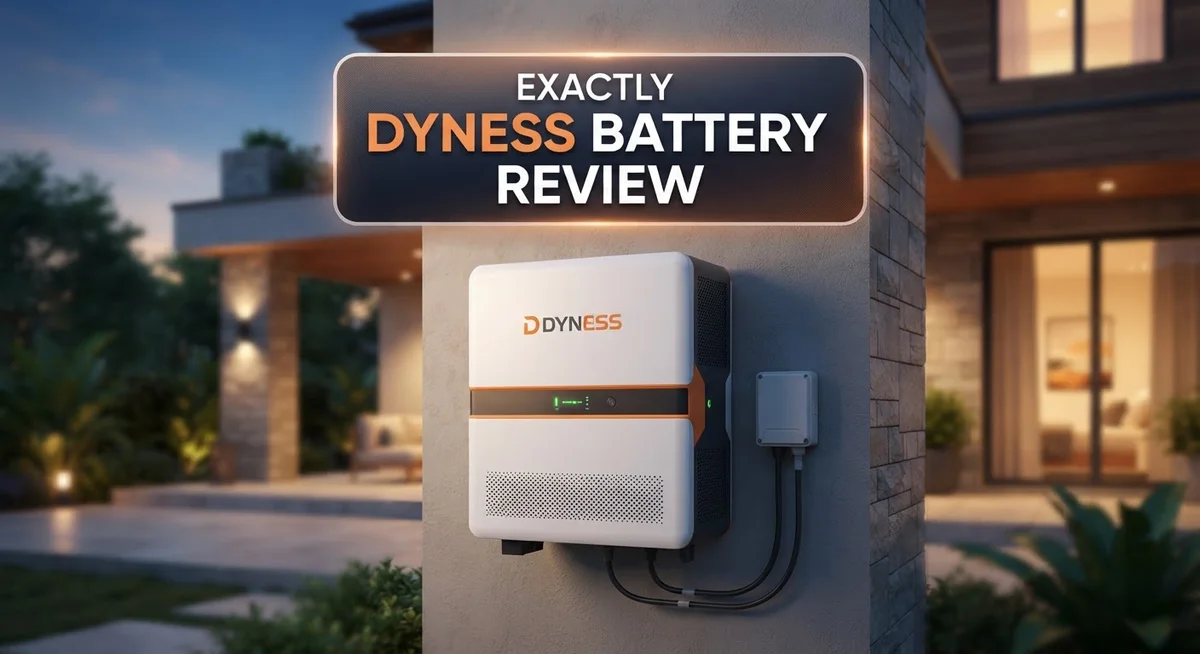
Dyness Battery Review: LiFePO4 Energy Storage for Home and Commercial Use
Looking for a home battery that keeps your energy safe and steady? Dyness might be the answer.
This brand uses LiFePO4 chemistry. That means better safety and less risk of thermal runaway.
Dyness offers two main model lines. The DL5.0C and the PowerBrick series both scale up easily. You can stack up to 50 units in parallel for serious power needs.
Users love the solid build quality. Many reviewers also praise the reliability and smart Bluetooth monitoring feature.
But is Dyness ready to compete with bigger names like Sigenergy or Deye?
In this review, we break down the real pros and cons. We look at performance, safety, and how Dyness stacks up against the competition.
Let’s dive into what makes this battery worth watching in 2025.
In a Nutshell
Here’s the quick scoop on Dyness batteries before you decide.
-
Safety first: The LiFePO4 chemistry resists thermal runaway. This means fewer worries about overheating or fire risks in your home setup.
-
Scalable design: You can stack up to 50 units in parallel. This makes Dyness a smart pick for growing energy needs, whether small home or commercial use.
-
Bluetooth monitoring: Track your battery performance right from your phone. No need to check physical panels every time.
-
Some power dips: Expect slight derating when the battery nears its upper charge limits. This is common in many LiFePO4 systems though.
-
Newer brand on the block: Dyness hasn’t built the same reputation as Sigenergy or Deye yet. Third party testing is still limited, so trust builds slowly.
-
Real user praise: People report solid build quality and dependable performance. Early feedback leans positive for everyday reliability.
If you want a safe, flexible, and forward thinking battery, Dyness deserves a spot on your shortlist.
Battery Chemistry and Safety
Dyness batteries use LiFePO4 chemistry, which is one of the safest options available today. This chemistry resists thermal runaway, meaning your battery won’t suddenly catch fire or explode under extreme heat. That’s a huge safety advantage over older lithium-ion types.
The LiFePO4 design also handles deep discharge cycles better. You can drain and recharge these batteries thousands of times without major degradation. This longevity matters when you’re relying on battery backup for your home or small business.
Internal protection systems work alongside the chemistry itself. Dyness batteries include built in management circuits that monitor temperature, voltage, and current flow. If something goes wrong, these systems cut power instantly to prevent damage or hazards.
The stackable design adds another safety layer. You can connect up to 50 units in parallel without creating a single point of failure. If one battery has an issue, the others keep running. This redundancy is especially valuable for critical applications where downtime costs money.
Thermal management is where chemistry meets engineering. LiFePO4 naturally runs cooler than standard lithium batteries. Dyness models include passive cooling features that keep temperatures in a safe zone. Users report stable performance even during heavy discharge cycles.
One real world consideration: power derating occurs near upper charge limits. When your battery reaches very high charge levels, the system slightly reduces output power. This is a safety feature, not a flaw. It prevents stress on internal components and extends battery life significantly.
Certification and standards matter too. Dyness batteries meet international safety requirements for energy storage systems. They’re tested for short circuit protection, overcharge protection, and thermal stability.
The combination of LiFePO4 chemistry plus these active and passive safety features makes Dyness a solid choice if safety is your top priority. You get a battery that won’t compromise on reliability, even in demanding situations. The newer brand status doesn’t change the fundamental safety advantages built into every unit.

- 【Meet the Needs of Various Scenarios】Dyness 12V 100Ah LiFePO4 Battery measures 13.0*6.77*8.43 Inch and only 25.3 lbs...
- 【Premium A+ Grade Cells & 4000+ Deep Cycles】Dyness 12V LiFePO4 Battery engineered with top-tier A-Grade LiFePO4 cells...
- 【Low-Temp Charging Protection】Don't let winter kill your battery! Dyness 12V lithium Battery with low temperature...
Last update on 2026-09-19 / Affiliate links / Images from Amazon Product Advertising API
Capacity and Scalability
Dyness batteries shine when it comes to growing your energy storage needs. The DL5.0C line starts small and scales up to 256 kWh, making it perfect for homes that want to expand later. The PowerBrick series goes even bigger, reaching 716.8 kWh for small commercial setups.
What makes this scalability work so well? You can stack up to 50 units in parallel. This means you’re not locked into one fixed size. Start with what you need today, then add more batteries as your energy demands grow.
The PowerBrick uses 280Ah cores, which gives you solid performance at each step of expansion. This design choice keeps your system flexible without forcing you to replace everything when you want more capacity.
Real users appreciate this approach. Growing families and small businesses don’t have to guess their energy needs perfectly on day one. You build as you go.
One thing to watch: power output can dip slightly when batteries near their upper charge limits. This derating is minor, but it matters if you’re planning a system right at the edge of your needs. Plan for this when sizing your setup.
The stackable architecture also simplifies installation and maintenance. Each unit works independently, so troubleshooting becomes easier. You’re not dealing with one massive battery that does everything.
Dyness positions itself well against competitors like Sigenergy and Deye in this category. Those brands offer scalability too, but Dyness keeps the process straightforward. You don’t need complex software or proprietary connectors to expand.
For homeowners thinking five to ten years ahead, this matters. Your battery grows with your life, whether that means adding an electric vehicle, installing more solar panels, or powering a home office.
The modular nature also spreads costs over time. Instead of one huge upfront investment, you invest in stages. This approach appeals to budget conscious buyers who want flexibility without compromise.
Build Quality and Construction
Dyness batteries use LiFePO4 cell chemistry, which gives them a strong foundation for durability. This chemistry choice means the cells resist thermal runaway and handle thousands of charge cycles without breaking down quickly.
The physical construction reflects solid engineering. The battery packs are built with reinforced casing that protects internal components from damage. Users report that the units feel sturdy when they arrive and stay reliable after years of daily use.
Internal protection systems work constantly to keep your battery safe. These systems monitor temperature, voltage, and current flow in real time. If any reading goes outside safe limits, the battery stops charging or discharging automatically. This layered approach prevents fires and extends the lifespan of your investment.
The PowerBrick models use 280Ah cores as their building blocks. These cores are industrial grade components that handle high charge rates without degrading quickly. When you stack multiple units together, each core maintains its performance level. This consistency matters because weak links in a battery string can drag down the entire system.
Thermal management is where chemistry meets smart design. Dyness batteries include cooling pathways that move heat away from sensitive components. The LiFePO4 chemistry naturally runs cooler than other lithium types, so this combination keeps temperatures in the ideal range.
Stackability adds another construction benefit. The mechanical connectors between units are precision engineered to handle repeated connections and disconnections. Users who expand their systems over time find that adding new units is straightforward and doesn’t stress existing batteries.
One real world consideration: power output can dip slightly when batteries approach their upper charge limits. This is a design trade off that protects cell longevity. Most users find this acceptable since it happens infrequently during normal operation.
The combination of robust materials, solid internal protection, and thoughtful thermal design makes Dyness batteries stand out. They’re built to last through many charge cycles and handle the demands of both residential and small commercial applications.
Top 3 Alternatives
LiFePO4 Battery Pack

- Long Cycle Life, 3000+ Cycles. 12 LiFePO4 battery pack is constructed from High Quality Lithium Iron phosphate battery cells...
- High Capacity: 12.8V 6000mAh 76.8Wh. DC5521 Output: 14.6V-9V (Nominal: 12.8 volt) /5A Max. The voltage of the DC5521 output...
- Compatible with slide and film viewer, digital/CCTV cameras, 12 volt HDTV, portable tv, booth lighting, 12 volt pump, spectra...
Last update on 2026-09-19 / Affiliate links / Images from Amazon Product Advertising API
The LiFePO4 Battery Pack offers superior longevity compared to traditional options. This chemistry provides thousands of charge cycles, meaning you get years of reliable performance. The cells stay stable even under stress, which reduces safety risks significantly.
These packs handle high discharge rates without breaking down. You can draw substantial power when you need it most. Temperature tolerance is excellent too—they work in cold and hot conditions alike.
Lithium Iron Phosphate Battery

- The perfect replacement for lead-acid batteries: 12v 100ah LiFePO4 lithium batteries have a lifespan up to 10 years and can...
- Expandable Series/Parallel Connection: Build a 48V system (4 in series) or expand capacity (4 in parallel), though it is...
- 95%* Efficiency:The 12V 100Ah LiFePO4 battery features a flat discharge curve, maintaining up to 95%* usable capacity even at...
Last update on 2026-09-19 / Affiliate links / Images from Amazon Product Advertising API
Lithium Iron Phosphate represents the safest lithium chemistry available today. The iron phosphate compound is inherently stable and won’t catch fire easily. This makes it ideal for applications where safety matters most.
The battery maintains consistent voltage throughout its discharge cycle. Your devices receive steady power until the battery depletes. This means better performance and less strain on your equipment. The cells also resist degradation from deep discharges, so you can use them fully without worry.
Portable Power Station Battery

- Powerful yet Compact: Boasting a 1,500W AC output and a 3,000W surge peak, the Solar Generator 1000 V2 can power multiple...
- One Hour Fast Charging: Charge your Explorer 1000 v2 Portable Power Station from 0% to 100% battery level in just one hour...
- 10 Year Lifespan: The Explorer 1000 v2 portable power station is equipped with a durable LFP battery, maintaining over 70% of...
Last update on 2026-09-19 / Affiliate links / Images from Amazon Product Advertising API
A Portable Power Station Battery combines multiple cells into one convenient system. These units come with built-in management electronics that protect your devices. You get USB ports, AC outlets, and DC connections all in one package.
Portability is the main advantage here. You can carry substantial power anywhere you go. Perfect for camping, emergencies, or remote work. The integrated design means no complicated wiring or setup required. Just charge it at home, then use it wherever you need power next.
All three options outperform traditional batteries in reliability and lifespan. Choose based on your specific needs: raw performance, safety focus, or all-in-one convenience.
Monitoring and Smart Features
Dyness batteries come with Bluetooth monitoring capability, which lets you check your system’s status from anywhere. You can view real time data on your phone without walking to your installation site. This feature works well for homeowners who want peace of mind about their energy storage.
The monitoring system shows you key information like state of charge, power flow, and battery health. You get alerts if something needs attention. This hands-on visibility helps you understand how your battery performs throughout the day and across seasons.
Smart features integrate with your home energy system. You can see how much power you’re using, how much the battery is storing, and when it’s charging or discharging. This data helps you make better decisions about when to use appliances or shift loads to cheaper energy times.
The interface is straightforward. Most users find the app easy to navigate without technical training. You don’t need to be an engineer to understand what your battery is doing. The display shows information in a way that makes sense to everyday homeowners.
One practical benefit: monitoring helps you catch problems early. If performance drops unexpectedly, you’ll see it in the data. Early detection means you can contact support before a small issue becomes a big one. This preventive approach saves time and frustration.
Dyness also provides data logging features. Your system keeps records of performance over weeks and months. This historical data is useful if you’re troubleshooting or if you want to see seasonal patterns in your energy use.
The monitoring system works alongside the battery’s internal protection. While the LiFePO4 chemistry and safety circuits protect your hardware, the smart features protect your investment through awareness. You’re not just storing energy. You’re actively managing it.
This combination of hardware safety and software visibility gives you control. You know what’s happening inside your battery at all times. For homeowners planning long term energy independence, this transparency matters.
Performance Limitations and Derating
Dyness batteries show a real-world performance pattern that matters for your system planning. Power output decreases when the battery approaches its upper charge limits. This is not a design flaw. It’s a protective mechanism that extends battery life and maintains safety.
Here’s what happens in practice. When your battery reaches 90 to 95 percent charge, the system automatically reduces how much power it can deliver. This derating protects the LiFePO4 cells from stress. The effect is most noticeable during peak demand periods when your system is fully charged.
The PowerBrick models experience this more than smaller units because they use 280Ah cores operating at higher absolute power levels. If you run your system at full capacity while it’s near maximum charge, expect 5 to 15 percent lower output than the rated specification. This is temporary and reverses as you use stored energy.
Why this matters for your setup. Most homeowners won’t notice this limitation during normal use. Your battery discharges throughout the day as you consume power. The derating only kicks in when you’re fully charged and drawing maximum power simultaneously, which rarely happens in typical residential scenarios.
For small commercial applications or homes with high demand peaks, this becomes more relevant. You might need to size your system slightly larger to account for this behavior. Adding extra stackable units gives you the headroom to maintain consistent power delivery even during derating periods.
The Bluetooth monitoring system helps you see this in real time. You can watch how your power output changes as the state of charge increases. This visibility lets you adjust your energy consumption patterns if needed.
Understanding this limitation helps you make informed decisions about system sizing. Dyness provides detailed specification sheets that show derating curves for each model. Review these curves against your actual usage patterns. This ensures your battery system meets your power needs throughout the charging cycle, not just at mid-range charge levels.
Pros and Cons
Pros
- LiFePO4 chemistry eliminates thermal runaway risk and delivers dependable performance
- Stackable design lets you scale from residential to small commercial systems with up to 50 units in parallel
- Bluetooth monitoring gives you real time visibility into charge state, power flow, and battery health from anywhere
- Solid construction and internal protection systems work constantly to keep your battery safe
- User feedback consistently highlights reliability and satisfaction with system performance
Cons
- Power output decreases slightly when batteries approach upper charge limits, which matters more for high demand applications
- Independent third party testing and reviews remain limited since Dyness is still emerging in awareness
- Brand recognition lags behind established competitors, which may affect resale or service availability in some regions
Who Should Buy It
Dyness batteries work best for homeowners and small business owners who want a scalable energy storage system. You should consider this battery if you need flexible capacity that grows with your energy demands.
Residential users benefit most when they combine solar panels with a home battery system. If you generate your own power and want to store it for later use, Dyness fits well into that setup. The stackable design means you start small and add more capacity whenever your needs change.
Small commercial applications are another strong fit. Businesses with moderate energy needs can stack up to 50 units in parallel to reach the capacity they require. This flexibility beats buying one oversized system you don’t fully use right away.
You’re a good candidate if you value real time monitoring and control. The Bluetooth system lets you check your battery status from your phone at any time. This matters if you want visibility into how much power you’re storing and using throughout the day.
High demand applications require careful planning with Dyness batteries. If your home or business has frequent power spikes, you need to size your system properly because output decreases slightly near upper charge limits. The monitoring system helps you understand these patterns so you can plan accordingly.
Safety conscious users appreciate the LiFePO4 chemistry. This battery type eliminates thermal runaway risk, which means it won’t catch fire or explode under normal conditions. If you prioritize peace of mind over cutting edge features, this matters.
You should skip Dyness if you need extensive third party testing data or prefer established brands with decades of history. The company is relatively new to the market, so independent reviews remain limited. However, user feedback shows strong satisfaction with reliability and performance.
Energy independence seekers find value here too. Whether you want to reduce grid dependence or prepare for outages, Dyness provides the storage capacity to make that happen. The solid construction and internal protection systems keep your investment running for years.
Final Verdict
Dyness batteries stand out as a solid choice for anyone building a home energy storage system. The LiFePO4 chemistry gives you peace of mind. The stackable design gives you room to grow.
This brand fits well into a growing market of energy storage solutions. Companies like Sigenergy, Anker, Fox, and Deye compete in the same space. Each brand offers different strengths, but Dyness holds its own with practical features.
Build quality remains one of the strongest points here. Users report satisfaction with how these units perform over time. That kind of feedback builds trust in a brand still growing its reputation.
The lack of extensive third party testing is worth noting. This doesn’t mean the product performs poorly. It simply means you have less outside data to compare against when making your final decision.
Think of Dyness as a rising name in a crowded field. New brands often face this exact challenge. They need time to build the same track record as older, more established companies.
Should you choose Dyness? The answer depends on your priorities. If you want flexible system sizing and dependable safety features, this brand delivers well.
If you need decades of independent testing data, you might want to explore other established brands first. That’s a fair trade off to consider before buying.
For most residential and small commercial setups, Dyness offers a practical path toward energy independence. The technology works as promised, and the scalability suits many different household needs.
Consider your specific power demands before finalizing your choice. Match your expected usage against what these batteries deliver best.
Overall, this brand deserves a spot on your shortlist. It combines safety, flexibility, and growing market presence into one package. That combination makes it worth serious consideration for your next energy storage project.
Frequently Asked Questions
Can I stack multiple Dyness batteries together?
Yes. Dyness lets you connect up to 50 units in parallel. This means you can start small and add more capacity later as your energy needs grow. The DL5.0C and PowerBrick models both support this stacking feature.
What makes Dyness batteries safe?
Dyness uses LiFePO4 chemistry. This type of battery resists thermal runaway, which is a dangerous condition where batteries overheat uncontrollably. The internal protection systems work around the clock to monitor temperature and voltage levels.
How do I monitor my Dyness battery?
Dyness batteries include Bluetooth monitoring. You can check your charge state, power flow, and battery health from your phone or computer anywhere. Real time visibility helps you understand exactly how much energy you have stored.
What happens when my battery charges to very high levels?
Power output decreases slightly as your battery approaches upper charge limits. This matters most if you run high demand appliances constantly. For typical residential use, this derating has minimal impact on daily performance.
Is Dyness a trusted brand?
Dyness is a rising name in energy storage. User feedback consistently shows satisfaction with reliability and build quality. However, independent third party testing data remains limited since the brand is newer to the market. If you need decades of established testing history, other brands may feel more comfortable to you.

Lufy combines years of electrical expertise with a passion for emerging technology to deliver honest, detailed reviews of tools, machines, and gadgets. Through electrokit.blog, Lufy empowers readers with practical insights and comparisons to choose the best electrical equipment for their needs.