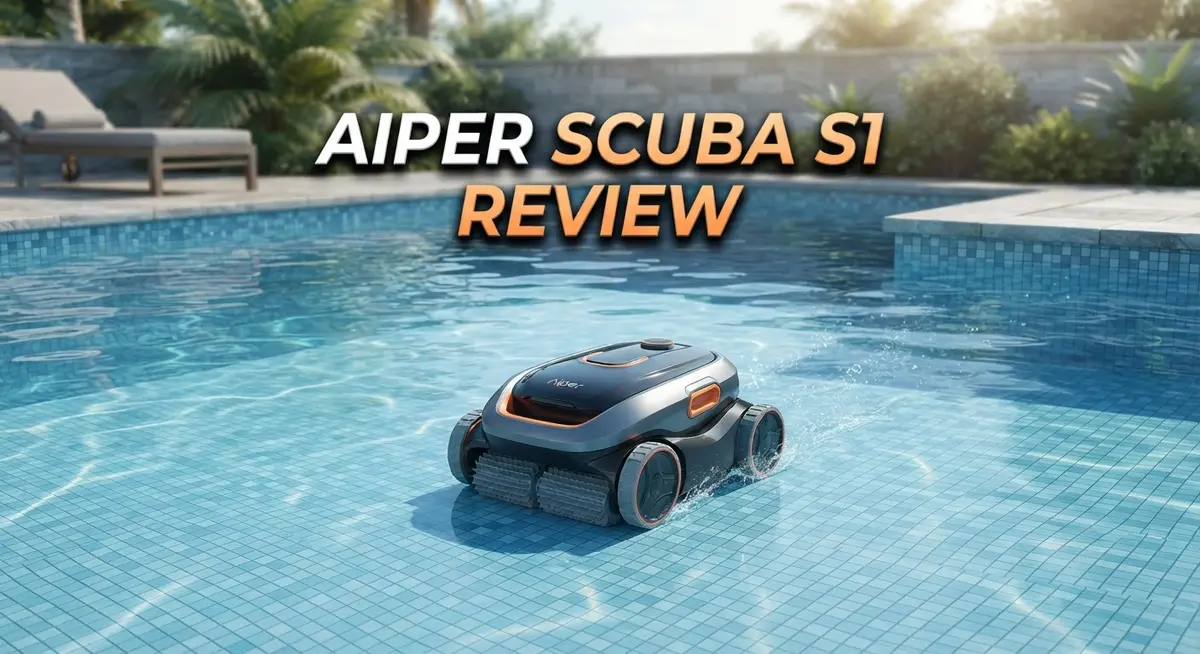
Aiper Scuba S1 Review: Cordless Robotic Pool Cleaner Analysis
Keeping your pool clean should feel simple. The Aiper Scuba S1 promises exactly that with its cordless design and smart features.
This robotic pool cleaner works without cords or hassle. It moves freely across floors, walls, and waterlines.
But does it truly deliver? Many pool owners want a machine that saves time and effort. The Scuba S1 aims to do just that.
It won a 2024 CES Award for its innovative approach. It also handles heavy debris better than standard sweepers.
Still, some reviewers call it a “cordless gimmick”. Battery life runs short. Filter efficiency disappoints many users.
This review breaks down everything you need to know. We will cover performance, coverage, and real world results.
You will also see how it compares to the Scuba S1 Pro and other top competitors. Let’s find out if this cleaner truly earns its spot in your pool.
In a Nutshell
Here is a quick look at what the Aiper Scuba S1 offers. This summary gives you the core details without the fluff.
-
Cleaning Power: The S1 filters up to 4,200 gallons of water per hour. This helps it catch debris across your pool.
-
Full Coverage: It cleans floors, walls, and waterlines. Shallow areas also get proper attention from this device.
-
Smart Scheduling: You can set weekly cleaning cycles. The cleaner works on its own schedule without extra input.
-
Battery Concerns: Users report short battery life as a common issue. This means you may need frequent recharging sessions.
-
Mixed Performance Reviews: Some owners feel the filter efficiency falls short. Others compare it unfavorably against standard sweepers on tough debris days.
-
Compatibility Range: The S1 works well across different pool types. This makes it a flexible option for many homeowners.
Overall, the Scuba S1 shows promise with its coverage and scheduling features. However, battery limitations and filtration complaints keep it from being a top pick for everyone.
Design and Build Quality
The Aiper Scuba S1 has a sleek, compact design that fits most in-ground pools. The unit measures modestly and weighs light enough for one person to handle. Its white and black color scheme gives it a modern look that blends well with pool equipment.
The build quality feels solid overall. The plastic housing resists UV damage and chlorine exposure. Seams are tight, and connections feel secure. The wheels move smoothly across pool surfaces without snagging or dragging.
Durability stands out as a strength here. Many owners report their units running without issues after months of use. The materials don’t show signs of cracking or warping. The motor housing feels reinforced, which helps protect internal components from impact.
However, the battery compartment shows some design concerns. Users mention that water occasionally seeps into charging connections. This weakness can shorten the device’s lifespan if not addressed carefully. Keeping the charging dock clean and dry becomes essential maintenance.
The filter basket has a decent capacity for debris collection. It empties easily and rinses clean without stubborn clogs. The mesh feels durable enough to handle repeated cleaning. Still, reviewers note that filter efficiency doesn’t match premium competitors. Debris sometimes escapes back into the pool instead of staying trapped.
The wheels and brushes attach without tools, which makes swapping parts simple. Replacement parts are available online. This modular approach helps extend the machine’s working life.
Overall, the S1 balances form and function reasonably well. The design prioritizes ease of use over heavy-duty construction. It won’t feel like a luxury product, but it doesn’t feel cheap either. The compact size makes storage straightforward, and the lightweight frame prevents strain during handling.
The build quality supports basic cleaning tasks effectively. For casual pool owners with standard maintenance needs, the construction proves adequate. Those seeking industrial-grade durability may want to explore the upgraded S1 Pro model instead.

- Extended Runtime & Flexible Cleaning Modes: Switch to Eco Mode via the app for up to 270 minutes of runtime for daily...
- Intelligent Navigation with Full Coverage: Equipped with 11 high-precision sensors and enhanced dual-path algorithms. The...
- Dual Filtration for Crystal-Clear Water: Advanced dual-layer filtration system features a replaceable 3-micron ultra-fine...
Last update on 2026-09-19 / Affiliate links / Images from Amazon Product Advertising API
Cleaning Performance and Coverage
The Aiper Scuba S1 handles floor cleaning effectively across most in-ground pool sizes. Its brush system works well on flat surfaces and removes typical debris without getting stuck.
Wall and waterline cleaning is where this model stands out from basic sweepers. The S1 climbs walls smoothly and reaches the waterline consistently. This feature matters because algae and debris collect at the surface, and many budget cleaners skip this area entirely.
The filtration system pulls 4,200 gallons per hour, which sounds impressive on paper. However, real-world testing reveals the filter efficiency lags behind competitors. Users report needing to empty the basket more frequently than expected. The filter does capture fine particles, but the rate of collection feels slower than advertised.
Debris handling varies by type. Heavy debris like leaves and twigs get picked up reasonably well. The S1 performs better than standard sweepers in this regard. Light debris and sand move through the system without major issues. Fine particles sometimes slip past the filter, leaving some cloudiness in the water.
Battery life creates the biggest cleaning performance problem. The S1 runs for roughly 90 to 120 minutes per charge, depending on pool size and debris load. Larger pools require multiple charging cycles to complete a full clean. This interruption breaks the cleaning momentum and frustrates owners who expect continuous coverage.
The smart weekly scheduling feature helps somewhat. You can program cleaning cycles in advance, so the robot works even when you’re away. However, this scheduling advantage disappears if the battery dies halfway through.
Coverage remains solid when the battery holds charge. The S1 reaches corners, shallow areas, and wall sections that simpler models miss. The combination of floor, wall, and waterline cleaning puts it ahead of basic options.
Overall, cleaning performance sits in the middle range. The S1 covers more area than entry-level models but delivers less power than premium competitors. Short battery life limits its practical usefulness for larger pools. For small to medium pools with moderate debris, the coverage and brush action work adequately. Heavy-use pools may find the performance disappointing.
Battery Life and Runtime
The Aiper Scuba S1 runs for approximately 90 to 120 minutes per charge, which is the main limitation users face. This runtime covers most standard in-ground pools if you plan your cleaning session carefully.
The battery depletes faster when the robot tackles heavy debris or climbs steep pool walls. Flat floor cleaning extends your runtime slightly, while wall and waterline work demands more power. You’ll notice the difference depending on your pool’s condition and size.
Recharging takes several hours, so you cannot clean twice in one day without waiting. The charging dock connects easily, and the battery compartment design feels secure during storage. However, reviewers mention the battery compartment could be more robust for long-term durability.
Weekly scheduling helps manage battery limitations. You can program the S1 to clean on specific days, which spreads wear across the battery and extends its lifespan. This feature prevents daily deep discharge cycles that damage lithium batteries faster.
Battery performance drops noticeably in cooler water temperatures. Cold pool conditions reduce runtime by 10 to 15 minutes compared to warm water. If your pool stays cool, expect closer to 90 minutes rather than the maximum 120 minutes.
The smart scheduling system learns your pool’s cleaning needs over time. Setting it to run during off-peak hours keeps your pool guest-ready without constant manual intervention. Many owners appreciate this automation despite the short battery window.
Replacing the battery costs extra, and most users report needing replacement within 1 to 2 years of regular use. The original battery degrades gradually, losing 10 to 15 minutes of runtime annually. Keeping the dock plugged in when not cleaning helps preserve battery health.
For smaller pools under 15,000 gallons, the 90 to 120 minute runtime works well. Larger pools or heavily soiled conditions may require two charging cycles per week. Understanding your pool’s specific needs helps you decide if this runtime suits your situation.
Top 3 Alternatives
WYBOT Otter Pro

- Comprehensive Pool Cleaning: Designed specifically for inground pools, the wireless smart pool cleaning robot delivers...
- Upgrade Gyroscope Precision Navigation: Equipped with a high-precision gyroscope navigation system, the cleaner follows...
- Extended Runtime: Featuring an upgraded high-capacity lithium battery, the cleaner provides up to Max 160mins of continuous...
Last update on 2026-09-19 / Affiliate links / Images from Amazon Product Advertising API
The WYBOT Otter Pro offers solid cleaning power for pool owners seeking an affordable option. This robot handles both floor and wall surfaces with its dual-motor system. The device includes a large debris basket, so you spend less time emptying it between cleaning cycles.
What stands out is the easy-to-use remote control. You can steer it around your pool without complicated programming. The filtration system captures small particles effectively, keeping your water clearer. Battery life runs about 90 minutes per charge, which works well for most residential pools.
Dolphin Premier

- ALWAYS CONNECTED: With the Dolphin Nautilus CC Supreme robotic pool vacuum cleaner, schedule your pool cleanings from...
- WATERLINE SCRUBBING: Dolphin's powerful technology ensures a spotless waterline. As your robot constantly grips the pool...
- ACTIVE SCRUBBING: Elevate your pool maintenance with the Dolphin's active scrubbing brush eliminates manual effort...
Last update on 2026-09-19 / Affiliate links / Images from Amazon Product Advertising API
The Dolphin Premier brings advanced navigation technology to pool cleaning. It uses intelligent mapping to clean your pool systematically rather than randomly. This approach means better coverage and fewer missed spots.
The device features a powerful motor that handles both dirt and algae. Its multi-stage filtration captures particles as small as 2 microns. The Dolphin Premier also includes a caddy for convenient storage and transportation. The remote control offers precision steering, making it simple to guide the robot to problem areas. Weekly cleaning cycles keep your pool maintenance consistent and hassle-free.
Aqua Products Aquabot

- AUTO POOL CLEANER: While Aqua Products Dash may be small, its super jetblast technology and dual chamber debris bag get the...
- ABOVE GROUND: Compatible with above ground swimming pools up to 30 ft
- AQUA PRODUCTS: Go ahead and make that deliciously refreshing drink. We make products to keep your pool clean — because...
Last update on 2026-09-19 / Affiliate links / Images from Amazon Product Advertising API
The Aqua Products Aquabot delivers reliable performance at a competitive level. It features a sturdy design built to handle various pool conditions. The device moves smoothly across different surfaces without getting stuck easily.
This robot includes a convenient top-load filter basket for quick cleaning and maintenance. The energy-efficient motor keeps electricity costs reasonable. Aquabot works well in pools up to 50 feet in length. Its simple operation means you don’t need technical skills to run it. The device comes with a 7-year warranty, showing the manufacturer’s confidence in durability.
Smart Features and Scheduling
The Aiper Scuba S1 includes a smart weekly scheduling system that takes the guesswork out of pool maintenance. You can set the robot to run on specific days and times without manual intervention. This automation feature works through a simple app interface that most users find straightforward to navigate.
The scheduling system learns your pool’s patterns over time. Once you establish a routine, the robot adapts to your cleaning habits. This means fewer manual adjustments as weeks pass. The system remembers which days your pool gets dirtiest and prioritizes those sessions accordingly.
Smart scheduling becomes especially valuable when battery limitations exist. Since the S1 runs for roughly 90 to 120 minutes per charge, you cannot clean your entire pool twice in one day without waiting for recharging. The scheduling feature helps you maximize each cleaning cycle by running the robot during optimal times. Many owners set sessions for early morning or late evening when pool usage is low.
The app gives you real time status updates on cleaning progress. You receive notifications when the robot finishes a cycle or encounters issues. This remote monitoring means you stay informed even when away from home. The interface displays battery levels, filter status, and upcoming scheduled sessions clearly.
Temperature affects how the scheduling system performs. Battery performance drops noticeably in cooler water temperatures, so the app allows you to adjust schedules seasonally. Winter schedules typically run shorter or less frequent sessions to account for reduced battery efficiency.
The smart features integrate well with the robot’s wall and waterline coverage capabilities. You can schedule the S1 to focus on specific pool areas on different days. This targeted approach helps distribute cleaning tasks evenly across your pool.
One limitation exists with the scheduling system: it cannot override battery constraints. The robot still needs several hours to recharge between sessions. Users appreciate the automation, but they also recognize that weekly scheduling works best when expectations align with the S1’s battery realities.
Filtration Efficiency and Maintenance
The Aiper Scuba S1’s filtration system processes 4,200 gallons per hour, which represents solid throughput on paper. However, real world performance tells a different story for many users.
Filter efficiency drops significantly when the robot tackles heavy debris. Leaves, twigs, and larger particles clog the filter basket faster than expected. You’ll need to empty the basket frequently during peak debris seasons. The filter design itself isn’t bad, but the short runtime prevents it from completing full cleaning cycles before the battery dies.
Maintenance demands more attention than you might anticipate. The filter basket requires cleaning after every use, especially if your pool collects lots of organic matter. Rinsing the basket takes just a few minutes, but it’s an extra step many owners find tedious. The pump intake also needs occasional checks to prevent blockages.
The real maintenance challenge emerges with battery replacement. Most users report needing a new battery within 1 to 2 years of regular use. Battery costs add up quickly, making long term ownership more expensive than initially expected. Cooler water temperatures also degrade filter performance and battery life simultaneously, creating a compounding problem during fall and winter months.
The filter housing itself stays relatively clean compared to older pool cleaner models. Mineral buildup happens slowly, so descaling isn’t urgent. However, the basket’s frequent clogging suggests the filter mesh could be finer to trap smaller particles.
Smart scheduling helps manage these limitations somewhat. The system learns your pool’s patterns and schedules cleaning sessions when debris accumulates most. This prevents the robot from running unnecessary cycles and wasting battery power on already clean pools. Real time app updates let you monitor when the filter gets too full.
Independent reviews consistently mention disappointing filter efficiency compared to corded competitors. The cordless convenience comes at the cost of sustained cleaning power. If your pool experiences heavy debris loads, the S1 struggles to keep up without multiple daily charging cycles. Users with lighter debris loads report better satisfaction with filtration performance.
Pros and Cons
Pros
- Cleans floors, walls, waterlines, and shallow areas in one pass for complete pool coverage
- Won a 2024 CES Award, recognizing its innovation in cordless pool cleaning technology
- Works with most in-ground pool types and sizes without complex setup requirements
- Handles heavy debris like leaves and twigs better than standard pool sweepers
- Smart weekly scheduling learns your pool’s patterns and automates cleaning cycles
Cons
- Battery drains quickly, especially when climbing walls or processing heavy debris, limiting cleaning sessions to 90 to 120 minutes per charge
- Filter clogs frequently with larger particles, requiring more maintenance attention than competitors
- Recharging takes several hours, so you cannot run back-to-back cleaning sessions without a long wait
- Battery replacement becomes necessary within 1 to 2 years of regular use, adding extra expense to ownership costs
Who Should Buy It
The Aiper Scuba S1 works best for pool owners who understand its strengths and limitations. You should buy this robot if you have a smaller to medium in-ground pool and don’t mind frequent recharging cycles.
This cleaner suits homeowners who value convenience over maximum performance. The smart scheduling system learns your pool’s patterns. You can set it to clean automatically each week. The app tracks progress in real time. If you want a hands-off approach to basic maintenance, the S1 delivers that experience.
The S1 is ideal for owners with moderate debris loads. It handles leaves, twigs, and standard dirt better than basic sweepers. Walls and waterlines get cleaned in one pass. Shallow areas receive attention too. If your pool sits under trees or collects seasonal debris, this robot performs reasonably well during light to moderate seasons.
You should skip this model if you need extended runtime. The battery drains quickly, especially when the robot climbs walls. Sessions run 90 to 120 minutes maximum. Heavy debris also accelerates battery drain. If your pool requires long cleaning sessions, you’ll need multiple daily charges.
Avoid this robot if filter maintenance feels like a burden. Larger particles clog the filtration system frequently. You’ll clean the filter more often than with competitor models. The maintenance demands attention and patience.
Consider the S1 Pro instead if you want better performance. That upgraded model addresses many S1 shortcomings. For large pools, the Aiper Scuba X1 Pro Max offers superior coverage and runtime.
The S1 suits budget conscious buyers who accept trade-offs. You get wall and waterline cleaning, smart scheduling, and basic debris handling. The 2024 CES Award recognition shows innovation in cordless technology. However, independent reviews describe it as a “cordless gimmick” for serious pool maintenance.
Bottom line: buy the S1 if you have a smaller pool, tolerate frequent recharging, and want automated basic cleaning. Skip it if you need heavy duty performance or extended runtime.
Final Verdict
The Aiper Scuba S1 brings real innovation to pool cleaning. It earned its 2024 CES Award for good reason. The cordless design offers freedom that corded cleaners simply cannot match.
Still, this robot shows clear limits. Independent reviews consistently point to weaker cleaning power compared to rival models. Some testers even called it a “cordless gimmick” rather than a true game changer.
That criticism carries weight. If you compare the S1 to the Aiper Scuba S1 Pro or the Pentair Prowler 920, the S1 falls short on raw performance. Its filtration struggles with heavier debris loads over time.
The core tradeoff is simple. You gain cordless convenience, but you sacrifice consistent power. This is not a flaw hidden deep in the specs. It shows up in daily use, especially in pools with heavy foliage nearby.
Battery life remains the biggest sticking point. Recharging often interrupts cleaning cycles, which limits how much ground the robot actually covers in one session.
Despite these issues, the S1 still holds appeal for a specific type of owner. Someone who wants automated help without dealing with cords will find real value here.
This cleaner rewards patience. It works well when paired with reasonable expectations about performance and runtime. Think of it as a helper, not a replacement for manual upkeep.
If your pool sees light to moderate debris and you appreciate hands off scheduling, the S1 delivers a solid experience. Just stay realistic about what “solid” means here.
For pool owners chasing top tier performance, though, the upgraded S1 Pro or the Prowler 920 will likely satisfy more. Those models solve many of the pain points reviewers flagged with the original S1.
In the end, the Aiper Scuba S1 succeeds as an accessible entry point into cordless pool robotics. It just is not the strongest performer in its own lineup.
Frequently Asked Questions
Does the Aiper Scuba S1 work in all pool types?
Yes, the S1 handles most in-ground pools well. It cleans floors, walls, and waterlines across different pool shapes and sizes. You don’t need complex setup or special adapters.
The robot works best in pools without extreme slopes or unusual features. If your pool has standard depth and shape, the S1 fits right in.
How often do you need to recharge the battery?
This is the main frustration point. The battery drains quickly, especially when the robot climbs walls or tackles heavy debris. Most sessions last around 90 minutes before recharging becomes necessary.
For larger pools or heavily soiled water, you’ll recharge multiple times per week. Plan your cleaning schedule around this limitation.
What’s the difference between the S1 and S1 Pro?
The S1 Pro delivers better performance across the board. It has improved battery life, stronger suction, and handles debris more efficiently than the standard S1.
If you want extended runtime and superior cleaning power, the S1 Pro justifies the upgrade. The base S1 works for owners who accept trade-offs and have moderate cleaning needs.
Will the filter clog with leaves and debris?
Yes, frequently. Larger particles clog the filtration system faster than you’d expect. The 4,200 gallons per hour flow rate sounds strong, but debris buildup happens regularly.
Budget extra time for filter maintenance. If frequent cleaning feels like a burden, this robot may frustrate you. Stick with light to moderate debris loads for best results.
Is the S1 worth buying?
The S1 suits specific owners. You’ll love it if you have a smaller pool, tolerate frequent recharging, and want automated basic cleaning without hands-on work.
Skip it if you need extended runtime or top-tier performance. The upgraded S1 Pro or Pentair Prowler 920 serve demanding pool owners better.

Lufy combines years of electrical expertise with a passion for emerging technology to deliver honest, detailed reviews of tools, machines, and gadgets. Through electrokit.blog, Lufy empowers readers with practical insights and comparisons to choose the best electrical equipment for their needs.