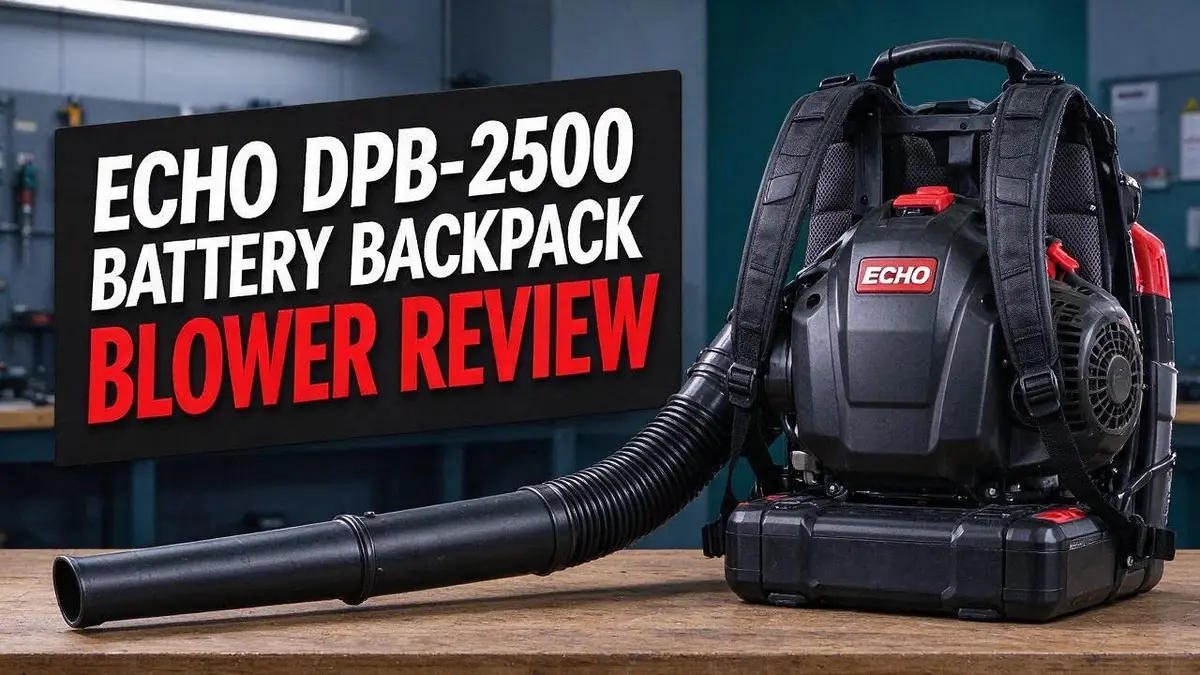
Echo DPB-2500 Battery Backpack Blower Review: Airflow, Runtime, and Verdict
Are you tired of heavy leaf piles and dusty driveways? The Echo DPB-2500 could be the helper you need.
This battery powered blower offers strong power without the noise and fumes of gas models. Many homeowners and landscapers want clean, quiet tools for daily chores.
It runs on the eFORCE 56V system with a brushless motor. Airflow reaches 549 CFM, and air speed hits 158 MPH. That means quick cleanups for patios, decks, and garden beds.
Choosing the right battery matters. The 2.5Ah pack runs up to 90 minutes, while the 5.0Ah pack lasts up to 180 minutes. Let’s see how this blower performs in real use.
In a Nutshell
- Comfort matters: The rubber handle has an over molded grip. Your hands stay relaxed during longer cleanup sessions.
- Cruise control saves effort: Set your speed once and let the blower run. You can keep steady pressure on big open lawns without holding the trigger.
- Pick your runtime: The 2.5Ah battery runs up to 90 minutes. The 5.0Ah battery stretches that to 180 minutes, which suits larger yards. One user raised runtime concerns, so think about your typical job length.
- Ideal for limited areas: Many parks, schools, and apartment complexes limit gas tools. This model fits those spaces well.
- Check the style: Product listings describe this model as handheld. Confirm it matches the way you plan to carry and use it.
- Compare before you buy: Echo often faces off against Milwaukee blowers in comparisons. Review both models to see which feels right for your needs.
Airflow and Blowing Power

- Great tools at a great price
Last update on 2026-11-01 / Affiliate links / Images from Amazon Product Advertising API
Airflow tells the real story of any blower. This model moves 549 CFM of air, which gives it plenty of push for wide areas.
Air speed reaches 158 MPH at the nozzle. That speed lifts damp leaves and loose grass clippings off the ground with ease.
Blowing force matters too. Turbo mode delivers roughly 16 to 17 newtons of force. This helps when debris clings to pavers or gravel.
Speed control gives you options. The variable throttle lets you match power to each job. Light tidying needs less force than clearing a wet patio.
Think of airflow as a tool, not a race. Higher CFM moves more material per pass. Lower settings save battery and reduce dust clouds.
Turbo mode works best for short bursts. Use it for stubborn debris in corners or along fence lines. Then drop back to a steady speed.
The motor keeps power steady as the battery drains. You feel consistent airflow from start to finish. Consistent output helps you finish faster.
Wind direction affects results too. Work with the breeze when possible. Start at the far edge and push debris to a collection spot.
Pro tip: Sweep in long, overlapping passes. This method moves more debris in less time and keeps your effort low.
Overall, the airflow suits homeowners and crews alike. It clears yards, decks, and walkways with confidence. Power feels strong without feeling wild.
Test the blower on a small patch first. Watch how far the debris travels. Adjust the throttle until the pile moves cleanly.
Good airflow saves time on every job. It also cuts down on repeat passes. Finding the right setting takes only a few minutes.
Battery Options and Runtime
This blower runs on a 56V battery platform. You can choose between two battery sizes, so you can match power to your yard.
The larger 5.0Ah battery stores 252 Wh of energy. It runs up to 180 minutes on a single charge.
Think about the size of your property. A small patio or short driveway may need less time. A large lawn or long gravel path may need the bigger pack.
The listed weight of 7.7 lbs includes the battery. Your arms and back may feel the difference on long days, so plan rest breaks.
Runtime depends on how you work. Running at lower speeds stretches each charge. Save full power for stubborn debris and dry leaves.
Cold weather can shorten battery life. Keep the pack indoors until you need it. Bring it to room temperature before a long session.
One owner reports concerns about battery runtime. The review text cuts off, so the full story stays unclear. Test your own runs before you rely on the blower for a big project.
Spare batteries keep you working on big jobs. Swap in a charged pack and keep going. Charge the spare while you use the first one.
Pick the pack that fits your routine. Weekend homeowners often do well with the smaller pack. Crews who blow large areas each day may prefer the bigger option.
Plan your battery use before you start. Estimate how much ground you need to cover. Then pick the pack that matches that task.
Check the charge level often during a job. A quick glance helps you avoid a dead blower in the middle of a path. Let the pack cool before you recharge it.
Handling, Comfort, and Throttle Control
Handling makes the difference after an hour of work. Your arms feel every minute of a long session. A blower that sits well in your hands keeps your stride steady.
Try a few easy moves first. Walk a short loop, then swing the nozzle left and right. Notice whether the tool pulls your wrist or stays level.
Your trigger hand does real work. Press the throttle gently when you start. Ease off when debris lifts off the ground. Small changes protect your wrist.
Switch hands to rest. Shift the grip from your dominant hand to your other hand every so often. This spreads the strain across both arms and shoulders.
Use the throttle for tight spots. Ease in and out near flower beds, fences, and parked cars. Gentle bursts move leaves without scattering mulch everywhere.
Keep one hand free when needed. With cruise control set, you can steer the nozzle around a planter. That freedom helps on sloped driveways where footing matters.
Stand with your feet apart. A wide stance keeps you steady when the nozzle pushes back. Bend your knees slightly and keep your back straight.
Wear gloves for better grip. Thin work gloves protect your palms from blisters. They also help your hand hold the handle firmly during long passes.
Watch your footing on wet surfaces. Wet leaves can slip under your boots. Take small steps and keep the nozzle low. Slow, steady passes give you more control than rushing.
Take short breaks. Set the blower down every twenty minutes. Stretch your wrists and shoulders before you pick it up again.
Practice makes the handling feel natural. After a few sessions, the blower feels like an extension of your arm.
Top 3 Alternatives
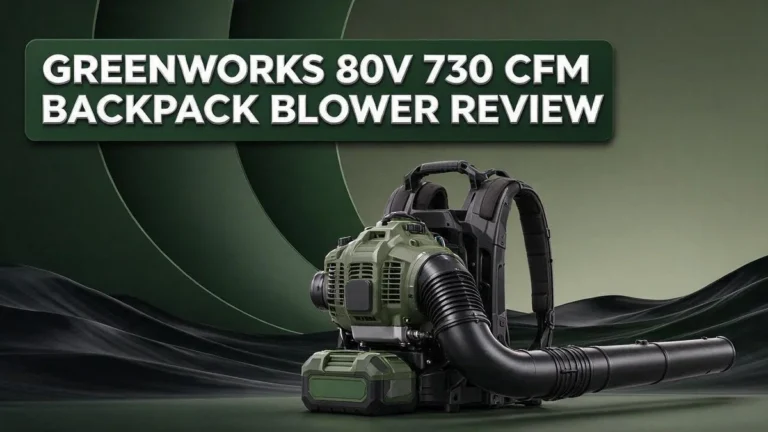
Milwaukee Backpack Blower

- POWERSTATE Brushless Motor delivers 650 CFM and 155 MPH
- Delivers a higher blowing force than up to 60cc gas while maintaining a noise level of 62dB(A)
- Reaches full throttle in under one second, boosting productivity and control
Last update on 2026-11-01 / Affiliate links / Images from Amazon Product Advertising API
The Milwaukee Backpack Blower works well for large properties. It delivers strong airflow that moves wet leaves and dirt with ease. Its padded harness helps spread the weight across your shoulders.
You can match the power to each task. Use gentle bursts for flower beds and full power for gravel paths. Many users say it feels balanced during long jobs.
Best for: Big yards and long cleaning sessions.
Makita Backpack Blower

- Powerful BL Brushless motor generates 64 CFM of suction power and 44" Of water Lift
- Up to 62 minutes of continuous operation on normal setting and 33 minutes on high setting using two 18V...
- Efficient two stage HEPA filter captures 99. 97% of particulates . 3 microns and larger extending the...

Last update on 2026-11-01 / Affiliate links / Images from Amazon Product Advertising API
The Makita Backpack Blower offers a smooth and steady feel. It clears patios and driveways fast. Many people also praise its simple controls and easy starting.
The tube and nozzle help you aim airflow into tight corners. Users often say the unit stays steady on uneven ground. It also runs quieter than many gas models.
Best for: Homeowners who want reliable performance every time.
Ryobi Backpack Blower

- High-Performance 40V Technology: Brushless Motor, Advanced Electronics, & High-Performance Lithium...
- Air Volume & Speed: 850 CFM & 180 MPH
- Extended Runtime: Over 2 Hours
Last update on 2026-11-01 / Affiliate links / Images from Amazon Product Advertising API
The Ryobi Backpack Blower fits people who want a practical choice. It handles light to medium cleanup jobs around the house. Its lightweight design makes it easy to carry for longer periods.
If you already own Ryobi batteries, setup is simple. You can use the same packs with other Ryobi tools. This keeps your garage organized.
Best for: Small to medium yards and everyday tidying.
Yard Cleanup Coverage and Best Tasks
Yard cleanup covers more ground than most people expect. This blower handles many common jobs with ease.
Where this blower shines
Leaves on open lawns are a great match. The blower pushes them into tidy piles in minutes.
Driveways and patios collect dirt and small debris. A few steady passes clear them fast.
Gravel paths need a gentle touch. Keep the nozzle a little higher so stones stay put.
Mulch beds and flower borders call for care. Use a low speed here so bark does not scatter across the yard.
Tasks that need a different approach
Wet, matted leaves stick to grass and resist the air stream. Rake them loose first. Then blow them into piles.
Large sticks and heavy clumps are not a good fit. Pick them up by hand instead.
Plan your yard in zones
Break the yard into sections before you start. Clear the back lawn first. Then move to the side path and finish with the driveway. This order keeps debris from blowing back onto areas you already cleaned.
Work from the far edges toward the exit point. Push piles onto a tarp for easy hauling. A tarp saves a lot of bending and lifting.
Get more from every session
Start with the hard surfaces. Driveways and patios show results right away. That quick win keeps you motivated for the lawn work.
Finish with a sweep of the entire yard. A final pass catches stray leaves near the fence line and under shrubs. Your yard looks finished, and you feel good about the job.
Motor Design and Long-Term Maintenance
The brushless motor does the main work inside this blower. It spins the fan with less friction than older designs.
Brushless motors have no carbon brushes to wear down. Older motors need brush swaps over time. This design removes that chore, so you spend more time working and less time repairing.
With less friction, the motor runs cooler during long sessions. Heat is a common reason power tools wear out early. Cooler operation supports a longer motor life.
Keep the air intake clear. Grass clippings and fine dust can build up around the intake screen. Check it after every session. A clogged intake forces the motor to work harder.
Wipe the housing with a dry cloth after each job. Avoid spraying water into the vents or the fan area. Moisture can reach the electronics and cause trouble later.
Inspect the nozzle and fan area once a month if you use the blower often. Look for cracks, loose screws, or packed debris. Tighten anything that wiggles. Small fixes prevent big repairs.
Listen for unusual sounds. A high whine or a rattle can signal a worn bearing or a loose part. Stop the tool right away and inspect it. Quick action protects the motor.
Clean the battery contacts too. Use a dry cotton swab to remove dust from the metal terminals. Clean contacts help the battery connect well every time you start the blower.
Hang the blower on a wall hook when it sits idle. Hanging keeps weight off the housing and the nozzle. Good storage habits protect the fan and the motor housing.
Keep a simple maintenance log in a notebook or phone. Write the date, the task, and any issues you notice. This habit helps you spot patterns early. Many owners forget small checks without written notes.
Noise, Emissions, and Gas-Restricted Use
Noise is a big concern for many homeowners. Neighbors often complain about early morning leaf blowing. A battery model can help you keep the peace.
The research does not list an official decibel rating for this blower. Still, battery power avoids the sharp engine roar that gas units create. Many people find the sound easier to live with.
Sound also travels farther on still, quiet days. Hard surfaces and open lawns can carry noise to nearby homes.
Emissions stay away from your breathing zone. A battery blower produces no exhaust at the point of use. You will not smell gasoline or see haze drifting over the patio.
This matters for kids, pets, and anyone who spends time outdoors. Fresh air stays clean while you work. Nobody needs to step away from fumes during a long session.
Gas limited areas open up new options. Some parks, campuses, and residential communities restrict gas powered tools. The research notes that this blower suits those spaces well.
Check local rules before you start. Some rules cover only certain tools or specific hours. A quick call to your property manager or city office can save time and trouble.
Plan your schedule around the neighborhood. Run the blower during daytime hours when people expect yard work. Skip early mornings and late evenings to keep neighbors happy.
Bottom line: the electric design gives you a cleaner and calmer way to clear debris. Test it once in your own yard so you know how it sounds to you.
Pros and Cons
Pros
- Cruise control keeps steady power on long jobs.
- The variable throttle lets you match speed to each surface.
- The rubber handle feels comfortable during longer sessions.
- You can pick a 2.5Ah or 5.0Ah battery based on your yard size.
- The brushless motor gives you quiet, efficient power.
Cons
- One owner reports that the battery runs out sooner than expected.
- The research lists few other drawbacks, so read more reviews.
- At 7.7 lbs with battery, the blower can feel heavy on big jobs.
- The product is listed as handheld, so check the form before you buy.
Who Should Buy It
Busy homeowners with small to medium yards often fit this blower best. Weekend cleanup becomes quick work. It clears leaves from patios, driveways, and garden beds in a short time. Short jobs suit it well.
People who dislike cords should look closely at this model. You never trap a cord under a wheel or hunt for an outlet. You simply pick it up and start working. That freedom matters for anyone who wants a faster routine.
Renters and apartment dwellers with shared outdoor spaces may also like it. Storing it indoors is simple because no fuel sits in the tank. A closet corner works well for a compact machine.
Plan for a spare battery on big jobs. Owners with large properties often keep a second pack charged. Swapping packs lets you finish the work without a long pause.
Skip this model for daily professional use. Landscape crews that run blowers for hours each day often need more power. Commercial users may want a gas model instead. Compare the listed performance against your daily workload before you commit.
Compare brands before you decide. Milwaukee blowers often appear in side by side reviews. Look at each model’s features and build quality, then choose the one that fits your routine. Read recent reviews from owners in your area.
Think about your usual cleanup first. If you mostly clear light debris, this blower fits well. Heavy wet leaves may need extra effort and a second pass.
Good fit for people who dislike hard starts. Gas engines can take several pulls. Battery models start with a simple trigger press. Less hassle means more time enjoying your outdoor space.
Final Verdict
The Echo DPB-2500 earns a spot on your shortlist. It gives you freedom from cords and steady power for everyday yard work. Its brushless motor and two battery options make it a practical pick for many households.
Start by thinking about your routine. A blower works best when it fits how often you clean. Occasional users will likely feel happy with this model. Frequent users should plan their charging around each week’s workload.
Try the tool in person when you can. Hold it, start it, and sweep a patio or driveway. Your own sense of balance tells you more than any chart. Pay attention to how the throttle responds under your hand.
Compare the options before you commit. Other ECHO battery models and Milwaukee blowers give you useful alternatives. Look at handheld and backpack styles side by side. Choose the machine that matches your yard, not the longest feature list.
Our final take is simple. The Echo DPB-2500 suits a typical yard with regular cleanup needs. Owners with bigger jobs or daily crew use should look at heavier duty gear. A careful choice now saves frustration later. Simple planning makes that choice easy.
Think about your storage and charging setup too. Keep batteries somewhere cool and dry between jobs. Store the blower indoors if you can, so the parts stay clean. Simple habits help the tool last for years.
Remember that your satisfaction matters most. Read the return rules before you buy from any store. A clear plan keeps you confident after the box opens. You deserve a blower that makes yard work feel easier. Take your time and trust your own judgment.
Frequently Asked Questions
Does the Echo DPB-2500 have cruise control?
Yes, it does. You can lock in your speed and keep steady airflow without holding the trigger. This helps on long sweeps across a driveway or lawn.
How long does one charge last?
Runtime depends on the battery you choose. The 2.5Ah pack runs up to 90 minutes, and the 5.0Ah pack runs up to 180 minutes. Lower speeds stretch each charge further.
Can I use it where gas tools are not allowed?
Yes. The research describes this model as suited to gas-restricted areas. Many apartment complexes, schools, and parks limit gas engines, so a battery model fits those spaces well.
Is it hard to start?
No. A battery blower has no engine to crank. You can start it right away and get to work without warming up.
What kind of upkeep does it need?
The brushless motor has fewer parts that wear out. Most upkeep involves keeping the air intake clear and wiping off dust after each job. Light cleaning goes a long way.

Lufy combines years of electrical expertise with a passion for emerging technology to deliver honest, detailed reviews of tools, machines, and gadgets. Through electrokit.blog, Lufy empowers readers with practical insights and comparisons to choose the best electrical equipment for their needs.